
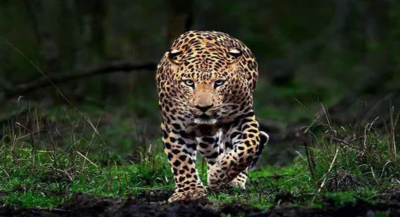
A leopard carcass was discovered in a field within Vangram Achalgarh, a forest village located in the Laxmipur range of the Sohagi Barwa Wildlife Division in Uttar Pradesh. Local forest officials stated that the exact cause of death remains unknown pending a complete post-mortem examination. To ensure compliance with national conservation protocols, the disposal of the leopard’s body will be conducted according to the standard operating procedures mandated by the National Tiger Conservation Authority. This incident has brought renewed focus to wildlife monitoring, anti-poaching measures, and habitat management within the protected area.
Geographical and Ecological Profile of the Sanctuary
Location and Territorial Borders
Sohagi Barwa Wildlife Sanctuary is located in the Maharajganj district of Uttar Pradesh. It was carved out of the Northern part of the Old Gorakhpur Forest Division in 1987. The sanctuary occupies a strategic location along international and interstate boundaries:
- Northern Border: Shares a contiguous international boundary with Nepal.
- Eastern Border: Adjoins the interstate boundary of Bihar, directly connecting with the Valmiki Tiger Reserve.
- Landscape Connectivity: Forms a vital corridor within the larger Terai Arc Landscape, allowing seasonal movement of large mammals across India and Nepal.
Topography and Drainage Network
The terrain across the 428 square kilometer sanctuary is almost flat, maintaining an average elevation of 100 meters above mean sea level. The entire landscape gently slopes from the northwest to the southeast. It features a critical hydrological network drained by multiple rivers, namely the Great Gandak, Little Gandak, Pyas, and Rohin. This network sustains numerous perennial ponds, oxbow lakes (locally called Tals), and seasonal swamps.
Biodiversity and Habitat Classification
Vegetation Cover and Flora
The sanctuary exhibits classic Terai-Bhabhar ecosystem characteristics, which can be broadly categorized into distinct botanical zones:
| Forest / Habitat Type | Key Floral Species | Ecological Features |
| Sal Forests | Shorea robusta (Sal) | Constitutes nearly 75% of the total sanctuary area. |
| Humid/Riverine Forests | Jamun, Gutal, Semal, Khair | Found along riverbanks and moist lowlands. |
| Waterlogged Lowlands | Tall Terai Grasslands, Cane patches | Locally called ‘chaurs’, submerged during monsoon. |
Faunal Diversity
Sohagi Barwa supports a high concentration of apex predators and herbivores. The primary mammalian species include the Royal Bengal Tiger, Indian Leopard, Sloth Bear, Jungle Cat, Small Indian Civet, and Chital (Spotted Deer). It also hosts Sambar, Hog Deer, Barking Deer, Nilgai, and Wild Boar. The reptilian population features the Indian Rock Python, Mugger Crocodile, Common Cobra, and Monitor Lizard.
Administrative Zoning and Conservation Protocols
Management Zones
The sanctuary is divided into seven distinct administrative forest ranges to streamline patrolling and habitat protection: Pakdi, Madhwaliya, Laxmipur, North Chouk, South Chouk, Seopur, and Nichlaul. To balance protection with scientific study, the total area is structured into functional zones:
- Core Zone: Strict protection area covering over 7,000 hectares with minimal human interference.
- Buffer and Multiple Use Zones: Surrounding areas covering over 33,000 hectares that absorb edge effects and manage local community interactions.
- Tourism and Awareness Zones: Dedicated sectors for regulated eco-tourism and environmental education.
Post-Mortem and Disposal Protocols
Wildlife mortality events involving scheduled predators like tigers and leopards follow rigid legal frameworks. The National Tiger Conservation Authority guidelines dictate that an independent committee, including forest officers and veterinary experts, must supervise the post-mortem. The disposal of the carcass through burning or burial must be documented photographically to eliminate any potential illegal trade in body parts.
IASPOINT Booster Facts for UPSC
- Important Bird Area (IBA): The sanctuary is recognized globally as an IBA. It provides critical habitat for the vulnerable Sarus Crane (Grus antigone) and features perfect grassland patches suitable for the endangered Bengal Florican.
- Singhrana Taal: Located deep inside the Chowk Range, this major wetland serves as a crucial congregation site for hundreds of migratory waterfowl and geese during the winter months.
- Magarmach Prajnan Kendra: A specialized Crocodile Conservation and Breeding Center operates inside the Darjiniya Tal, which falls under the Nichlaul range of the sanctuary.
- Historical Forest Tramway: Asia’s first forest tramway operated inside this landscape from 1925 to 1983. It ran for 40 kilometers from the Laxmipur station to transport timber out of the dense Gorakhpur forests.
- IUCN Status: The Sohagi Barwa Wildlife Sanctuary is classified under IUCN Category IV, designated specifically as a Habitat and Species Management Area.