
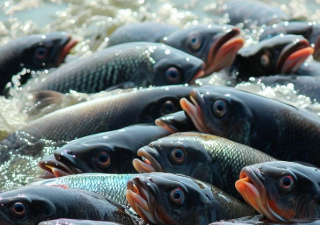
The Department of Fisheries has launched comprehensive model guidelines to expand cold water aquaculture across India’s upland zones. This strategy positions the cold water fisheries sector as a core component of the national Blue Economy. By targetting high-altitude mountainous ecosystems, the initiative aims to balance ecological conservation with economic growth. It drives employment, food security, and eco-tourism across the Himalayan and Northeastern states.
Overview of Cold Water Fisheries Ecosystem
Cold water aquaculture operates within delicate, high-altitude aquatic environments. These systems are defined by specific biochemical and geographical parameters.
- Environmental Parameters: The sector relies on snow-fed rivers, streams, lakes, and reservoirs. The water must maintain a temperature range between 5°C and 25°C. Dissolved oxygen levels must remain above 6 mg/L, with a pH level between 6.5 and 8.0.
- Geographical Spread: The ecosystem spans over 5.33 lakh square kilometers of mountainous terrain. It covers Jammu & Kashmir, Ladakh, Himachal Pradesh, Uttarakhand, Arunachal Pradesh, Sikkim, Meghalaya, and Nagaland. It also extends to the hill districts of West Bengal, Tamil Nadu, Kerala, and Karnataka.
- Biodiversity Status: India has identified more than 278 cold water fish species within these upland waters.
Key Fish Species and Altitude Zoning
Different species are cultivated based on altitude, water flow, and temperature thresholds.
Rainbow Trout (Oncorhynchus mykiss)
This exotic species is a low-volume, high-value fish native to North American Pacific waters, introduced to India in 1907. It serves as the primary candidate for intensive cold water aquaculture. It adapts easily to artificial fertilization and is cultivated at elevations above 1,500 meters in cool, clean, and well-oxygenated flowing waters.
Golden Mahseer (Tor putitora)
Known as the “tiger among fish,” this endangered indigenous cyprinid is highly prized for freshwater sport fishing. It populates the Himalayan foothills across the Indus, Ganga, and Brahmaputra basins. It features large scales, thick lips, and long barbels. It grows at an average rate of 10 cm annually and spawns over rocky or gravel substrates. Cultivation is carried out at relatively lower altitudes compared to trout.
Snow Trout (Schizothorax richardsonii)
This indigenous minor carp is endemic to the Himalayan region. It thrives in torrential streams and lakes that receive direct snowmelt water.
Current Production Status and Regional Performance
India’s total fish production stands at approximately 197.75 lakh tonnes. Cold water fisheries contribute nearly 3% of total inland fish production. The national cold water fish output is around 7,000 metric tonnes, with trout accounting for nearly 6,000 metric tonnes.
| State/UT | Trout Production Volume | Key Infrastructure & Achievements |
| Jammu & Kashmir | 3,010 MT | India’s leading producer; features the Kokernag hatchery and over 2,000 private trout units. |
| Himachal Pradesh | 1,673 MT | Pioneered Recirculating Aquaculture Systems (RAS) and achieved captive breeding of Golden Mahseer. |
| Uttarakhand | 710 MT | Operates 2,500 raceways across Pithoragarh, Bageshwar, and Chamoli districts. |
| Ladakh | 50 MT | Successfully managed local trout seed production in high-altitude desert zones (Drass and Chochut). |
Technological Interventions in Cold Water Aquaculture
The expansion of upland fisheries relies on shifting from traditional ponds to advanced, high-yield engineering systems.
Flow-Through Raceways
These are rectangular concrete channels with a continuous, unidirectional water flow. They prevent metabolic waste accumulation and maintain stable oxygen levels. A standard layout of 30 to 45 square meters yields double the output of conventional static ponds.
Recirculating Aquaculture Systems (RAS)
RAS filters and recycles water within a closed loop. It utilizes mechanical and biological filters to remove solid waste and ammonia. This technology minimizes water consumption, making aquaculture viable in areas with limited seasonal water availability.
Biofloc Systems and Poly-Tanks
Biofloc technology converts toxic ambient nitrogen into functional microbial protein feed. High-density polyethylene poly-tanks provide crucial water buffering during lean winter periods when natural stream flows decline.
Financial Allocations and Policy Frameworks
Central schemes provide targeted credit lines and subsidy support to modernize infrastructure.
- Pradhan Mantri Matsya Sampada Yojana (PMMSY): Out of a national approved outlay of ₹21,963.48 crore, over ₹5,638.76 crore is sanctioned specifically for cold water states. This fund supports 5,663 raceways, 54 trout hatcheries, 65 RAS units, 4,600 mountain ponds, and 293 cold storage units.
- Fisheries and Aquaculture Infrastructure Development Fund (FIDF): This fund backs large-scale investments in premium broodstock training facilities and regional distribution centers.
- PM Matsya Kisan Samridhi Sah-Yojana (PM-MKSSY): A ₹6,000 crore sub-scheme focusing on aquaculture insurance, performance grants for micro-enterprises, and formalizing the unorganized supply chain.
- Kisan Credit Card (KCC): Extension of KCC facilities to fishers ensures short-term working capital for purchasing high-protein floating pellets and disease-management kits.
Socio-Economic Impact and Eco-Tourism
The cold water sector acts as a driver for socio-economic development in remote mountain border areas.
- Livelihood Generation: The sector provides direct livelihood support to 23.51 lakh families across hilly states. Insurance schemes cover 33.78 lakh fishers to mitigate occupational hazards.
- Angling Tourism: Cultivating sporting fish like the Golden Mahseer attracts international anglers, building a structured eco-tourism economy that generates non-farm revenue for local communities.
Challenges and Mitigation Strategies
The sector faces structural constraints due to its fragile geography. High initial capital costs for RAS installations and a lack of localized feed mills reduce profit margins. Mountain ecosystems are vulnerable to climate-induced flash floods, cloudbursts, and shifting river courses. To address these vulnerabilities, the Model Guidelines focus on strict biosecurity protocols, mandatory pathogen screening, SPF (Specific Pathogen Free) seed certification, and public-private partnerships to build temperature-controlled cold chains.
IASPOINT Booster Facts for UPSC
- National Cold Water Fisheries Clusters: Four dedicated clusters are located at Anantnag (Jammu & Kashmir), Pithoragarh (Uttarakhand), Kullu (Himachal Pradesh), and Kargil (Ladakh).
- Nodal Research Body: The ICAR-Directorate of Coldwater Fisheries Research (DCFR) is located at Bhimtal, Uttarakhand. It drives stock characterization and selective breeding programs.
- IUCN Status: The Golden Mahseer (Tor putitora) is listed as Endangered on the IUCN Red List due to habitat degradation and dam construction blocking migration routes.
- International Partners: India collaborates with Norway and Iceland to transfer technology regarding cold-water broodstock management and genetic selection.
- Anatomy Fact: Mahseer possess prominent barbels near their mouths, which act as sensory organs to locate prey along murky, gravel riverbeds.