
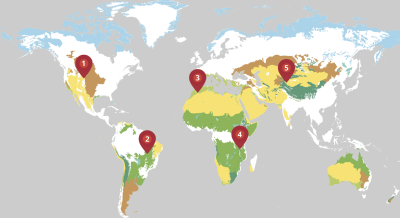
The United Nations has declared 2026 as the International Year for Rangelands and Pastoralists, drawing renewed attention to grasslands, savannahs and desert ecosystems. These biomes are among the world’s most threatened landscapes, yet they are often overlooked in global climate negotiations that have largely prioritised forests. Scientists, indigenous groups and conservation bodies argue that grasslands are vital carbon sinks, support biodiversity, and sustain water systems, livelihoods and food security.
Why Grasslands Matter
Grasslands and savannahs cover vast areas across continents and store carbon in soils and roots. They also support grazing, wildlife, and traditional livelihoods. Unlike forests, they are often treated as empty or degraded land, which increases the risk of conversion for agriculture, plantations and infrastructure. This weakens their ecological role and reduces climate resilience.
Threats to Open Ecosystems
Grasslands face multiple pressures:
- Habitat loss due to agricultural expansion and land conversion.
- Invasive species that replace native grasses and increase fire intensity.
- Fossil fuel extraction and mining.
- Suppression of indigenous land management practices such as controlled burning and grazing.
- Climate change, including droughts, floods and rising temperatures.
These pressures are visible in Australia’s desert grasslands and Brazil’s Cerrado, both of which are under severe ecological stress.
Climate Negotiations and Policy Gaps
Recent UN climate talks have continued to focus heavily on forests, including forest finance mechanisms such as the Tropical Forest Forever Facility. However, grasslands remain underrepresented in the UNFCCC process. Conservation experts argue that climate, biodiversity and land degradation goals must be linked across the three Rio Conventions – the UNFCCC, the Convention on Biological Diversity, and the Convention to Combat Desertification.
Need for Integrated Action
Policy experts recommend that grasslands be recognised in nationally determined contributions, land restoration plans and biodiversity strategies. They also stress secure land tenure for indigenous peoples, pastoralists and traditional communities. Better coordination among ministries and international bodies is seen as essential for protecting grasslands as both ecological and social systems.
Last Modified: April 25, 2026