
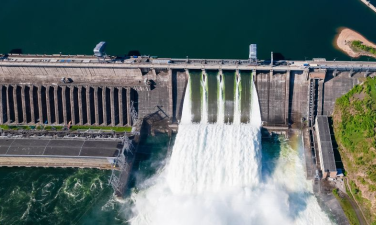
The Union Ministry of Environment, Forest and Climate Change (MoEFCC) has granted Terms of Reference (ToR) clearance to the 1,100 MW Velimalai Pumped Storage Hydro Electric Project in Kanniyakumari district, Tamil Nadu. Proposed by the Tamil Nadu Green Energy Corporation Limited (TNGECL), this project represents the state’s first energy storage plant planned under a Public-Private Partnership (PPP) model on a Build-Own-Operate-Transfer (BOOT) basis. The ToR clearance issued by the Ministry’s Expert Appraisal Committee (EAC) allows the developer to conduct a comprehensive Environmental Impact Assessment (EIA) and host necessary public hearings. This step is a preliminary regulatory requirement rather than a final environmental clearance.
Project Layout and Technical Specifications
The infrastructure is designed to bridge the gap in peak power management and support the integration of intermittent renewable energy sources into the grid.
Power Generation and Cycle Mechanics
- Installed Capacity: The system will generate 1,100 MW through an underground powerhouse. The powerhouse features four generation units with a capacity of 275 MW each.
- Operating Cycle: The system utilizes off-peak electricity to pump approximately 3.94 million cubic metres of water from the lower reservoir to the upper reservoir over a duration of 6.94 hours.
- Peak Power Supply: During hours of peak electricity demand, the stored water is released downward to generate electricity for six hours daily. The projected peak annual energy generation is estimated at 2,080.55 million kilowatt-hours (kWh).
Reservoir Engineering and Siting
- Upper Reservoir: Located near Maruvattar Kannu village, featuring an artificial dam structure measuring roughly 53 to 56 metres in height from the riverbed. It possesses a gross storage capacity of 4.39 million cubic metres.
- Lower Reservoir: Positioned near Madathattuvilai village, upstream of the pre-existing Mambazhathuraiyar Dam. It features a dam structure measuring roughly 51 to 62.5 metres in height, providing a gross storage capacity of 4.91 million cubic metres.
Land Acquisition and Forest Division
The execution of the project requires the diversion of both forest and revenue land across the Kalkulam taluk, covering Alur and Velimalai villages.
Territorial Breakup
- Total Land Requirement: The infrastructure footprint spans a total area of 159.25 hectares.
- Forest Infrastructure Land: The project requires the diversion of 64.07 hectares of forest land, demanding mandatory Forest Clearance under federal conservation laws.
- Non-Forest Allocation: The remaining 95.18 hectares consists of non-forest revenue and private land parcels. The project layout indicates that the upper reservoir will occupy around 28 to 29 hectares, while the lower reservoir requires between 26 and 47 hectares.
Environmental Safeguards and EAC Mandates
The Expert Appraisal Committee for River Valley and Hydroelectric Projects evaluated the proposal during its 48th meeting and imposed strict ecological conditions.
Reclassification to Open-Loop Design
The project was initially proposed as a closed-loop off-river system where water circulates continuously in a controlled cycle with minimal reliance on natural inflows. However, the EAC flagged that the lower reservoir site relies on a non-perennial natural stream. Due to this connection with a natural watercourse, the committee reclassified the project as an open-loop scheme, subjecting it to more stringent hydrological scrutiny.
Mandatory Impact Appraisals
- Downstream Flow Protection: The developer must formulate a detailed conservation plan to sustain natural downstream flows, preserve aquatic ecology, and protect existing ecosystem services.
- Wildlife Proximity Studies: The project site sits roughly 1.63 kilometres from the eco-sensitive zone boundary of the Kanniyakumari Wildlife Sanctuary. Consequently, the developer must obtain a mandatory Wildlife Clearance from the National Board for Wildlife (NBWL) and conduct comprehensive biodiversity studies.
- Hydrological Data Submission: The developer is required to submit certified water availability data spanning the last ten years. This data must prove that evaporation and recirculation losses can be replenished without consuming the baseline rainfall yield of local streams.
- Construction Management: Additional mandates include developing comprehensive plans for muck disposal, lowering forest land usage wherever possible, and measuring long-term greenhouse gas emissions from the reservoirs.
Project Typology and System Comparison
The operational framework of pumped storage hydro setups differs based on their interaction with natural aquatic networks.
| Feature / Metric | Closed-Loop Pumped Storage | Open-Loop Pumped Storage (Velimalai Project Status) |
| Water Source Interaction | Physically isolated from natural flowing river systems after initial fill. | Associated with a consistent or seasonal natural stream, river, or pre-existing reservoir. |
| Hydrological Footprint | Minimal daily impact on natural aquatic lifelines and river basin frameworks. | Can alter natural stream dynamics, requiring dedicated environmental flow (E-flow) releases. |
| Replenishment Source | Relies on external ground or trucked water lines to balance evaporation losses. | Recoups seasonal volume drops directly from incoming stream catchments or pooling basins. |
| Regulatory Scrutiny | Generally faster clearance pathways due to lower environmental disruptions. | High scrutiny regarding fish migration, downstream user rights, and riverine ecosystem changes. |
IASPOINT Booster Facts for UPSC
- Pumped Storage Hydropower (PSH): Known as a “water battery,” it acts as a configuration of two water reservoirs at different elevations that can generate power as water moves down through a turbine, or store energy by pumping water up. It offers a large-scale option for grid energy storage.
- Terms of Reference (ToR): Guidelines issued by the regulatory authority (MoEFCC) addressing the environmental concerns that must be studied during the EIA process. It defines the structural scope of environmental data collection.
- Expert Appraisal Committee (EAC): A statutory sectoral committee operating under the MoEFCC that reviews industrial, infrastructure, and river valley projects to recommend or reject the grant of Environmental Clearance.
- Kanniyakumari Wildlife Sanctuary: Located in Tamil Nadu at the southern tip of the Western Ghats, this sanctuary forms a key wildlife corridor. It is recognized as an Important Bird Area (IBA) and serves as a critical habitat for various endemic species of flora and fauna.
- National Board for Wildlife (NBWL): A statutory board constituted under Section 5A of the Wild Life (Protection) Act, 1972. Chaired by the Prime Minister of India, it serves as the apex body for reviewing all wildlife-related matters and approving projects within or around national parks and sanctuaries.