
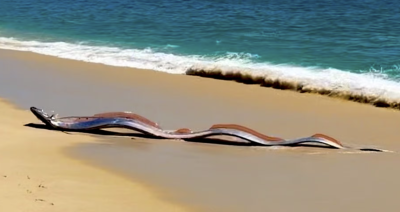
A rare marine sighting in Cabo San Lucas, Mexico, has drawn attention after two giant oarfish were seen close to the shoreline. Oarfish are deep-sea creatures that are seldom observed near the surface. The unusual appearance of two such fish in the same area has made the event notable for marine observers and the public alike.
What Happened
Beachgoers first noticed one oarfish struggling near the shore. While efforts were being made to guide it back into deeper water, a second oarfish was spotted nearby. The simultaneous presence of two oarfish in shallow coastal waters is extremely uncommon and has added to the significance of the sighting.
About the Oarfish
- Oarfish live in deep ocean layers, often around 3,000 feet below the surface.
- They can grow up to 30 feet long, making them the longest bony fish known.
- Their bodies are ribbon-like and silvery, with a bright red dorsal crest.
- They are among the least understood fish because they are rarely seen alive.
Why the Sighting Matters
The coastline near Cabo San Lucas has recorded only a few oarfish sightings over past centuries. Such rare encounters provide scientists with valuable opportunities to study deep-sea species that are otherwise difficult to observe. These events may help improve understanding of their movement, habitat, and behaviour.
Myths and Scientific View
Oarfish are often called doomsday fish in popular culture. In some traditions, their appearance near the surface has been linked to earthquakes or other disasters. However, there is no scientific evidence supporting any connection between oarfish sightings and natural calamities. The recent sighting remains an important reminder of how little is known about deep-ocean life.
Last Modified: April 28, 2026