
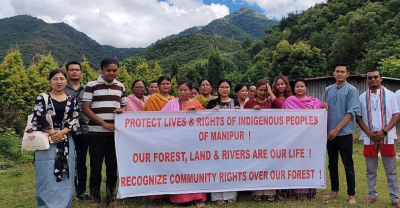
The Anal Naga tribe of Manipur’s Chandel district continues to preserve their ancestral lands through two distinct community-led forest governance frameworks known as Uju and Rangkang. Implemented without state enforcement, these traditional systems rely on indigenous ecological knowledge, village-level councils, and customary laws to manage natural resources. The Anal model highlights how community-governed conservation protects local biodiversity and secures tribal livelihoods without relying on strict state-enforced exclusions or wildlife sanctuaries. This indigenous management strategy offers practical models for designing participatory and inclusive forest conservation policies across India’s northeastern states.
Institutional Architecture of Anal Naga Forestry
The Anal Naga tribe divides its common property resources into distinct categories based on usage, ecological value, and regeneration needs. The administration of these lands falls under the village authority, guided by customary elders.
The Uju System: Community-Managed Forests
- Definition and Scope: Uju refers to designated community-managed reserved forests situated near village settlements.
- Regulation: These forests are strictly regulated by village elders and the traditional village council.
- Resource Extraction: Commercial logging is completely banned. Local residents can only harvest timber, firewood, and non-timber forest products (NTFPs) for personal, domestic consumption after obtaining formal clearance from the council.
- Penalties: Unauthorized tree cutting, clearing of undergrowth, or wildlife hunting within Uju boundaries attracts financial fines or social penalties determined by customary law.
The Rangkang System: Untouched Ecological Reserves
- Definition and Scope: Rangkang denotes sacred, untouched forest zones left undisturbed to facilitate natural ecological succession and regeneration.
- Absolute Protection: No resource extraction, grazing, or human intervention is permitted within these boundaries.
- Ecological Function: These areas act as micro-refuges for local flora and fauna, protecting critical watersheds, stabilizing slopes from landslides, and serving as natural seed banks that replenish neighboring Uju zones.
- Spiritual Value: The absolute protection of Rangkang zones is reinforced by traditional taboos and spiritual beliefs that look at these forests as the domain of protective spirits.
Core Principles of the Anal Model
The longevity and success of these tribal conservation practices rely on specific community values and governance methods.
| Governance Pillar | Operational Mechanic | Ecological Benefit |
| Collective Decision-Making | The village council includes representatives from different clans to settle boundary disputes and harvest schedules. | Prevents the over-exploitation of common resources by individual families. |
| Traditional Ecological Knowledge | Tree cutting and bamboo harvesting follow seasonal cycles based on plant reproduction and weather patterns. | Ensures fast forest recovery and maintains structural canopy cover. |
| Inclusive Conservation | Protection strategies focus on co-existence, rejecting the forced eviction of forest-dwelling families. | Lowers human-wildlife conflict and reduces community resistance to conservation efforts. |
Comparative Analysis of Forestry Paradigms
Understanding how traditional systems differ from modern state conservation helps highlight the unique strengths of indigenous land management.
State-Led Fortress Conservation
- Mechanism: Relies on legal declarations of National Parks and Wildlife Sanctuaries under central statutes.
- Enforcement: Uses forest guards, physical fencing, and strict exclusion zones, often resulting in conflicts with local communities over traditional grazing and gathering rights.
- Cost: Demands high budgetary allocations for administrative upkeep, boundary mapping, and anti-poaching forces.
Indigenous Uju-Rangkang Framework
- Mechanism: Operates via community consensus, customary rules, and long-standing ancestral boundary markings.
- Enforcement: Relies on social monitoring and community accountability, ensuring locals retain managed access to forest resources for survival needs.
- Cost: Self-sustaining and zero-cost, driven entirely by voluntary community participation and local pride.
IASPOINT Booster Facts for UPSC
- The Anal Naga Tribe: The Anal people are recognized as a Scheduled Tribe in Manipur and constitute one of the older settler groups within the Naga tribal umbrella. They primarily inhabit the Chandel district in southeastern Manipur, which shares an international border with Myanmar.
- Chandel District Geography: Known as the gateway to Myanmar, Chandel has a rugged, hilly terrain covered mostly by Tropical Semi-Evergreen and Moist Deciduous forests. This region forms part of the Indo-Burma Biodiversity Hotspot, one of the 36 globally recognized biodiversity hotspots.
- Constitutional Protections: Article 371C of the Indian Constitution provides special provisions for the hill areas of Manipur. It mandates the creation of a Standing Committee comprising members elected from the hill areas to oversee legislative matters concerning tribal land, customs, and economic development.
- The Manipur Land Revenue and Land Reforms Act, 1960: This act explicitly exempts the hill areas of the state from its operation, allowing traditional tribal chiefs and village authorities to retain control over land allocation and forest management.
- Community Conserved Areas (CCAs): The Uju and Rangkang systems are classic examples of CCAs. The Wild Life (Protection) Amendment Act of 2002 formally recognized similar community initiatives by introducing “Community Reserves” to legally safeguard community-managed lands outside standard national parks.