
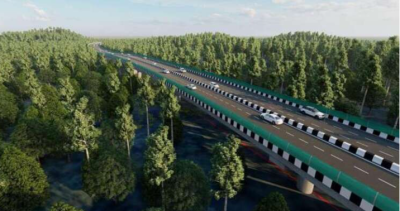
India is taking a major step in wildlife-sensitive infrastructure planning with the Delhi-Dehradun Expressway passing through the Rajaji National Park landscape. The project includes a long elevated stretch designed to allow free movement of animals below, reducing habitat fragmentation in one of North India’s key elephant and tiger areas. The development places conservation within highway design rather than treating it as an afterthought.
Why Wildlife Corridors Matter
Wildlife corridors help animals move safely between habitats for food, breeding, and migration. Roads and highways often split forests into isolated patches. This increases roadkill, blocks movement, and weakens genetic diversity in animal populations. Corridors such as overpasses, underpasses, and green bridges reduce these risks.
Global Models of Success
- Banff National Park in Canada is widely seen as a leading example of wildlife crossings. Its overpasses and underpasses have reduced collisions and supported species such as elk, bears, and cougars.
- The Netherlands has built a large network of wildlife crossings, including ecoducts, to reconnect fragmented habitats in densely populated areas.
- These examples show that ecological connectivity can be built into transport infrastructure at scale.
Rajaji’s Elevated Corridor Design
The Delhi-Dehradun Expressway includes an elevated section of roughly 12 to 16 kilometres through the Rajaji region. This design allows elephants and other wildlife to move beneath the road without major disturbance. It is especially important for wide-ranging species that avoid confined passages. The project reflects a shift towards integrating biodiversity concerns into mega infrastructure.
Significance for India
India has used smaller underpasses and eco-bridges before, but Rajaji marks a larger and more ambitious model. It shows how development and conservation can be balanced in ecologically sensitive zones. If replicated, this approach could influence future highways in other wildlife-rich regions of India.
Last Modified: April 27, 2026