
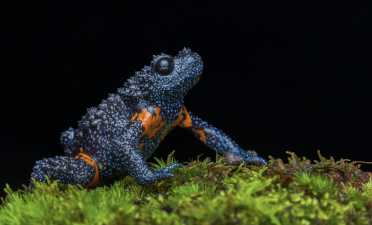
Galaxy frogs, or Melanobatrachus indicus, have emerged as a case study in how intrusive wildlife photography can threaten rare species in the Western Ghats. The tiny endemic amphibian, already listed as vulnerable by the International Union for Conservation of Nature, is found only in a few forest patches in Kerala and depends on a highly specific microhabitat under rotten logs.
Rare Western Ghats Amphibian
Galaxy frogs are among India’s most elusive amphibians. They measure about 2 cm to 3.5 cm and are known for their black skin with pale blue speckles and orange markings. First described in 1878, they remain poorly studied because they are difficult to locate and do not produce calls like many other frogs.
Threats to Survival
The species already faces pressure from habitat loss, firewood collection, landslides and conversion of forest land for agriculture. In recent years, photo tourism has become an additional threat. The frogs were also designated as a flagship species of Mathikettan Shola National Park in 2021, which increased public attention and, in some places, human disturbance.
Impact of Photographers
A study found that seven galaxy frogs discovered in a forest patch in 2020 later disappeared after repeated visits by photographers. The photographers reportedly overturned logs, handled frogs with bare hands and used high-intensity flashes for long periods. Such activity may have altered the microhabitat, dried the frogs’ skin and disrupted feeding and breeding behaviour. The frogs were not seen again in later visits and are presumed dead.
Need for Ethical Wildlife Rules
The study calls for strict ethical standards in nature photography. These include avoiding handling and chasing animals, limiting flash use, preventing disturbance to microhabitats and training photographers, guides and tour operators. Conservation experts stress that rare species should be observed without interference, as even small changes in temperature, humidity and shelter can affect amphibians that breathe through their skin.
Last Modified: April 25, 2026