
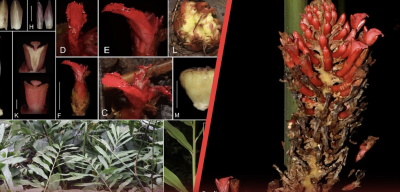
A new species of ginger, Parakaempferia alba, has been discovered in the Siang Valley of Arunachal Pradesh. The finding adds to the botanical wealth of the Eastern Himalayas, a region recognised globally for high biodiversity and endemism. The species was documented in the Miglung area of East Siang district and published in a scientific journal of botany. It was located in a humid habitat along shaded streambanks at an altitude of 150–400 metres.
Discovery and Location
The plant was recorded in the Miglung area of East Siang district in Arunachal Pradesh. It grows in humid, sandy soil along shaded streambanks. The habitat lies in the Siang Valley, part of the Eastern Himalayas. The altitude range of the discovery site is 150–400 metres.
Scientific Significance
The species belongs to the ginger family, Zingiberaceae. Its discovery strengthens the view that the Eastern Himalayas are a global biodiversity hotspot. Such findings are important for plant taxonomy, conservation, and ecological studies. The research team included Tatum Mibang, Bipankar Hajong, Devpratim Koch, and Pankaj Bharali.
Potential Uses and Conservation Value
Scientists have noted that the species may have medicinal and economic value. Further research is needed to assess its phytochemical properties and possible applications. The discovery also underlines the need to protect fragile forest and streamside habitats. Conservation of such microhabitats is essential for preserving rare and newly identified plant species.
Eastern Himalayas Biodiversity
The Eastern Himalayas are among the world’s most important centres of plant diversity. The region supports a large number of endemic and threatened species. New species discoveries from this area continue to improve understanding of India’s natural heritage. They also show the importance of field-based botanical exploration in remote landscapes.
Last Modified: April 27, 2026