
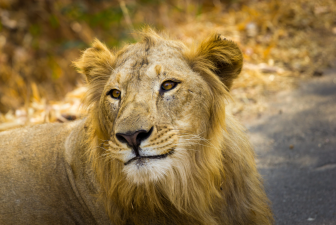
Barda Wildlife Sanctuary in Gujarat has emerged as a crucial second habitat for Asiatic lions, which had been completely absent from the landscape for 143 years. Following a 2018 outbreak of Canine Distemper Virus that caused the death of 28 lions in the Gir forest, wildlife conservationists identified a single point of failure risk due to the concentration of the entire wild population in one single geographic zone. The 16th Asiatic Lion Population Estimation conducted in May 2025 recorded 891 lions in Gujarat, out of which 17 individuals now reside in Barda. Designated as Satellite Population 8 under Project Lion, this sanctuary provides an essential ecological insurance policy to safeguard the species against catastrophic epidemics, utilizing scientific methods like the Boma technique for prey relocation and telemetry for genetic management.
Overview of the 16th Asiatic Lion Population Estimation (2025)
The 2025 census, executed by the Gujarat Forest Department, highlighted a massive demographic shift and expansion of the big cat population across the Saurashtra peninsula.
- Total Population: 891 individuals, registering a 32% growth rate compared to 674 lions in the 2020 estimation.
- Geographical Range Expansion: The spatial distribution area expanded by 16.67%, growing from 30,000 square kilometers in 2020 to 35,000 square kilometers in 2025 across 11 districts of Saurashtra.
- Core versus Satellite Distribution: Only 394 lions reside within the core protected zones (Gir National Park and Gir Wildlife Sanctuary). The remaining 497 lions form satellite populations inhabiting human-dominated landscapes, coastal belts, and new sanctuary territories.
| District Range | Lion Population Counts (Top 3 Districts) |
| Amreli District | 339 lions |
| Gir-Somnath | 222 lions |
| Junagadh | 191 lions |
Barda Wildlife Sanctuary as the Second Home
Barda Wildlife Sanctuary offers a fully protected backup landscape to reduce the vulnerability of the species to localized natural disasters or disease outbreaks.
Historical Context and Topography
Lions were last recorded in the Barda hills in 1879 before human pressure and hunting drove them to localized extinction. Spanning 192.31 square kilometers across Porbandar and Devbhumi Dwarka districts, the sanctuary features a rugged, semi-arid terrain characterized by dry deciduous forests, scrublands, and rocky hills that perfectly mimic the natural habitat architecture of Gir.
Natural Recolonization and Translocation
The revival began when a lone male lion naturally migrated into Barda via ecological corridors in 2023. To establish a viable breeding nucleus, the forest department translocated five lionesses under strict scientific protocols. By 2025, natural breeding led to the birth of 11 cubs, bringing the total resident population to 17 lions. Barda is officially recognized as Satellite Population 8 under Project Lion.
Key Conservation Interventions
Sustaining a top predator population in a fragmented, long-vacant habitat demands active ecological manipulation and high-tech tracking.
Prey Augmentation via Boma Technique
Initial surveys in Barda revealed a highly depleted prey base, counting just 119 spotted deer (chital). To counter this deficiency and prevent lions from straying into human settlements for livestock, authorities implemented the Boma technique. Originating in Africa, this method involves herding wild herbivores into funnel-shaped canvas enclosures to transport them without causing physical stress or capture myopathy (fatal muscle damage). Thousands of chital are being moved from Gir, where their population exceeds 90,000, to optimize prey density in Barda.
Genetic Management and Monitoring
Because the entire global population of Asiatic lions recovered from fewer than 50 individuals in the early 20th century, the species suffers from severe genetic bottlenecks. This lack of genetic diversity reduces reproductive viability and compromises immunity against viral threats. To promote maximum genetic mixing, conservationists utilize satellite telemetry and radio collars to monitor pride dynamics, track movement corridors, and strategically manage the positioning of specific prides inside the sanctuary.
Threats and Challenges to Lion Expansion
Despite remarkable population growth, the dispersal of apex predators into newer landscapes introduces several anthropogenic and ecological hazards.
- Linear Infrastructure Barriers: Expanding lion prides must navigate high-speed transport networks, including state highways and railway corridors, leading to fatal accidental collisions.
- Agricultural Hazards: Fragmented landscapes feature open irrigation wells into which lions frequently fall, alongside illegally electrified farm fences set up by local communities to ward off wild herbivores.
- Human-Wildlife Conflict: As more than half of the lion population moves outside state-protected forests into revenue wastelands and agricultural fields, encounters with humans and domestic livestock increase, testing local tolerance.
IASPOINT Booster Facts for UPSC
- Project Lion: Announced on August 15, 2020, during the 74th Independence Day address, it is a 10-year comprehensive conservation strategy with a total financial allocation of ₹2,927.71 crore by the Central Government.
- Gene Pool Sites: To counter genetic vulnerability, Project Lion has designated three specialized gene pool conservation units at Rampara in Saurashtra, and Sakkarbaug and Satveerada in Junagadh.
- IUCN Status: The Asiatic Lion (Panthera leo persica) is classified as “Endangered” under the International Union for Conservation of Nature Red List.
- Legal Protection: Placed under Schedule I of the Wildlife (Protection) Act, 1972, granting it the highest level of statutory legal protection against hunting and commercial trade in India.
- CITES Status: Listed under Appendix I of the Convention on International Trade in Endangered Species of Wild Fauna and Flora, which strictly prohibits commercial international trade of the species.
- Technological Tracking: A specialized Hi-Tech Monitoring Unit was established at Sasan-Gir in 2019, operationalizing real-time tracking using radio-telemetry data to minimize conflict and track disease indicators.