
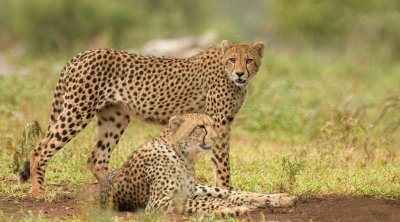
The Ministry of Environment, Forest and Climate Change has updated progress on Project Cheetah, India’s flagship wildlife restoration programme initiated to reestablish the world’s fastest land mammal following its regional extinction in 1952. As of May 2026, the country’s total cheetah population has reached 53 individuals, a count that includes 33 cubs born on Indian soil. This conservation milestone follows multiple rounds of intercontinental translocations from Namibia, South Africa, and Botswana into Kuno National Park in Madhya Pradesh. The initiative adopts a structured, landscape-based metapopulation framework to restore degraded grassland ecosystems, improve local livelihoods, and ensure the long-term genetic viability of the species within its historical range.
Institutional Framework and Conservation Objectives
Implementing Agencies
The project operates under the central direction of the National Tiger Conservation Authority (NTCA). Technical support, site assessments, and population monitoring protocols are managed by the Wildlife Institute of India (WII) in coordination with the Madhya Pradesh State Forest Department and international experts from the Cheetah Conservation Fund (CCF).
Primary Core Goals
- Ecosystem Restoration: Reintroducing a top predator to restore the functional ecological roles of neglected, highly exploited grassland and semi-arid scrub forest ecosystems.
- Global Conservation: Establishing a wild, free-ranging population of cheetahs outside the African continent to safeguard the global genetic pool against localized catastrophic events.
- Umbrella Protection: Capitalizing on the cheetah as a flagship species to secure resources for conserving other threatened open-canopy fauna, including the Indian Gazelle (Chinkara), Blackbuck, and Lesser Florican.
Translocation Progress and Demographic Status
Source Countries and Influx Timeline
The founding population was established through sequential intercontinental airlifts across three African countries to maintain broad genetic diversity.
| Translocation Phase | Source Country | Timeline | Number of Individuals | Target Destination |
| Phase I | Namibia | September 2022 | 8 Cheetahs (5 Female, 3 Male) | Kuno National Park |
| Phase II | South Africa | February 2023 | 12 Cheetahs (7 Male, 5 Female) | Kuno National Park |
| Phase III | Botswana | February 2026 | 9 Cheetahs (6 Female, 3 Male) | Kuno National Park |
Reproductive Success and Population Breakdown
The current survival and adaptation patterns match global benchmarks for large carnivore translocations.
- Total Current Population: 53 cheetahs.
- Founder Population: 20 surviving adult cheetahs from the translocated cohorts.
- Indian-Born F1 Generation: 33 thriving cubs. This reproduction includes multiple successful litters born to Namibian cheetah Jwala and South African cheetah Gamini inside the specialized enclosures.
Mortality Analysis and Challenges
Since the inception of the project, 14 translocated cheetahs have died. Veterinary and field monitoring teams attribute these mortalities to distinct natural and environmental challenges:
- Systemic infections and septicaemia linked to skin abrasions underneath satellite radio collars during peak monsoon high-humidity conditions.
- Fatal injuries sustained during territorial conflicts within restricted soft-release enclosures.
- Acute health complications, including organ failure and tick-borne parasitic infections.
Landscape Management and Habitat Expansion Strategy
Kuno National Park (Primary Hub)
Located in the Sheopur district of Madhya Pradesh, Kuno spans a core area of 748 square kilometers supplemented by a buffer zone of 487 square kilometers. The habitat consists of dry deciduous forests interspersed with open alluvial grasslands, providing an adequate prey base composed of Chital (Spotted Deer), Sambar, Barking Deer, and Nilgai.
Secondary Satellites and Ecological Corridors
To prevent overcrowding and accommodate the expanding population, the NTCA is actively preparing secondary release sites across central and western India.
Gandhisagar Wildlife Sanctuary
Situated on the northern boundary of Mandsaur and Neemuch districts in Madhya Pradesh, this site serves as the immediate immediate expansion zone. Extensive prey augmentation, fencing of a 64-square-kilometer core block, and security deployment were completed prior to the initial transport of cheetahs to the sanctuary.
Banni Grasslands
Located in the Kachchh district of Gujarat, this arid ecosystem represents one of Asia’s largest tropical grasslands. Preparatory works focus on restoring native grass species, removing invasive Prosopis juliflora Prosopis juliflora shrubs, and augmenting blackbuck populations to establish habitat readiness.
Nauradehi Wildlife Sanctuary
Part of a larger contiguous forest patch in Madhya Pradesh, this site is being integrated into a broader regional metapopulation framework. This framework relies on managed translocations between distinct pockets to replicate natural dispersal and prevent inbreeding depression.
IASPOINT Booster Facts for UPSC
- Historical Extinction: The Asiatic Cheetah (Acinonyx jubatus venaticus) was officially declared extinct in India in 1952. The last recorded individuals were hunted in 1947 in the Korea district of present-day Chhattisgarh.
- Taxonomic Distinction: The introduced animals belong to the South African Cheetah subspecies (Acinonyx jubatus jubatus). While genetically distinct from the critically endangered Asiatic Cheetah surviving exclusively in Iran, the African variant shares identical ecological functions and habitat preferences.
- IUCN Red List Status: The Cheetah as a global species is categorized as ‘Vulnerable’ on the International Union for Conservation of Nature (IUCN) Red List, with fewer than 7,000 individuals remaining in the wild.
- Botswana Vanguard Animals: The 9 cheetahs imported from Botswana in February 2026 are highly valued because approximately 76% of Botswana’s cheetah population naturally thrives outside fenced protected areas, making them behaviorally adapted to human-dominated agricultural landscapes.
- Legal Catalyst: In January 2020, the Supreme Court of India lifted a prior 2013 restriction, permitting the introduction of African cheetahs into suitable habitats on an experimental basis to assess local adaptation.
- First Mile Technology: Field teams utilize automated Satellite-VHF (Very High Frequency) telemetry collars, drone monitoring arrays, and 24-hour ground tracking teams to map daily home ranges and detect early signs of physiological stress.