
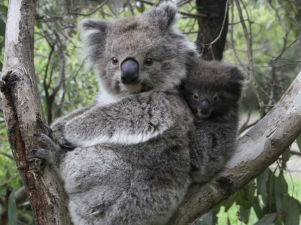
Koalas in southeastern Australia have shown an unusual recovery pattern. After a severe population crash in Victoria in the early 1900s, the species not only rebounded in number but also began regaining genetic variation. The finding is for conservation biology because it shows that a population starting from a narrow genetic base can still rebuild useful diversity over time.
Population Crash and Recovery
In Victoria, koala numbers fell to around 500 individuals by the early 20th century, mainly due to the fur trade. To prevent local extinction, some koalas were moved to nearby islands. These island populations increased over time, and later some animals were returned to the mainland to strengthen the Victorian population.
Genetic Bottleneck and Inbreeding Risk
The Victorian koalas came from a small number of founders, creating a genetic bottleneck. Such bottlenecks reduce genetic diversity and can raise the risk of inbreeding. Inbreeding may lead to poor health, deformities, and reduced survival. By 2020, the Victorian population had grown to nearly half a million, but much of it still descended from those limited founder groups.
What the Genetic Study Found
Researchers analysed genetic data from 418 koalas across 27 populations in eastern Australia. They found that Victoria’s koalas still had relatively low underlying diversity, but rapid population growth increased gene reshuffling. This created more varied genetic combinations and allowed beneficial mutations to spread more easily. Some physical defects, including tooth and testicle malformations, appear to have declined in the Victorian population.
Conservation Significance
The study suggests that rapid population recovery can help species escape an extinction spiral, at least in some cases. It also shows that low initial diversity does not always permanently limit a species. The findings may influence future conservation genetics, especially for species facing severe population decline. However, some recovered species may still need targeted intervention if genetic problems persist.
Last Modified: April 28, 2026