
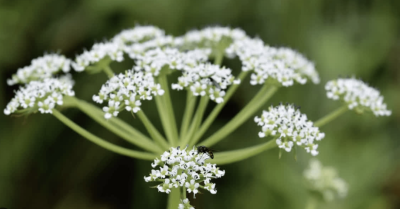
A team of researchers has identified a new plant species, Tetrataenium paikadae, in the high-altitude grasslands of Eravikulam National Park in Idukki district, Kerala. The species belongs to the Apiaceae family, which includes carrot, coriander and celery. It was found in the Western Ghats, one of India’s richest biodiversity hotspots. The discovery adds to the botanical significance of the protected grasslands of Eravikulam.
Discovery and Location
Tetrataenium paikadae was recorded in moist, marshy grasslands at elevations of 1,000 to 2,500 metres above sea level. The plant grows in a fragile montane habitat that supports several endemic and rare species. Its discovery marks the ecological value of the Western Ghats and the need to protect high-altitude grassland ecosystems.
Plant Features and Identification
The species grows to a height of 30 to 80 centimetres. It has densely stiff-haired stems, ovate leaves and clusters of small white flowers. It flowers from July to September and fruits from October to November. Researchers distinguished it from related species by examining the number and arrangement of oil tubes in its fruits, a key taxonomic feature in the Apiaceae family.
Scientific Significance
The study has been published in the Nordic Journal of Botany, an international scientific journal based in Sweden. The research received support from the Council of Scientific and Industrial Research and the Anusandhan National Research Foundation. The discovery is for plant taxonomy, biodiversity documentation and conservation planning in the Western Ghats.
Background and Naming
The species was named in honour of the late Rev. Fr. Joseph Paikada, former Principal and Manager of Devagiri St. Joseph’s College, in recognition of his contribution to education. The discovery is the second major plant find by the same research team within four months, following the identification of Tetrataenium manilalianum in the same national park.
Last Modified: April 28, 2026