
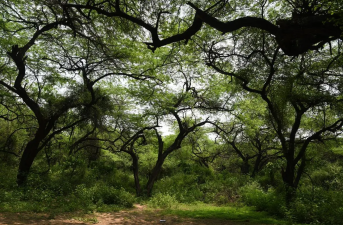
The Forest Advisory Committee (FAC) functioning under the Union Ministry of Environment, Forest and Climate Change has granted Stage-I (in-principle) clearance for the diversion of over 3,000 hectares of forest land. This diversion facilitates major infrastructure and mining projects across Arunachal Pradesh, Chhattisgarh, Goa, and Odisha. The approved proposals include the Attunli and Kalai hydropower projects in the sensitive Brahmaputra basin, alongside coal and iron ore mining expansions. To balance developmental needs with ecological preservation, the committee has mandated stringent conditions, including phased approvals, compensatory afforestation, and site-specific wildlife management plans vetted by national institutes.
Major Infrastructure Projects Cleared
Overview of Approved Projects
| Project Name | State | Sector | Forest Area Diverted | Key Location Detail |
| Attunli Hydroelectric (680 MW) | Arunachal Pradesh | Hydropower | 261.53 hectares | Talo (Tangon) river, Dibang Valley |
| Kalai Hydroelectric Stage-II (1,200 MW) | Arunachal Pradesh | Hydropower | 869.35 hectares | Lohit river, Namsai and Anjaw |
| Kente Extension Opencast Mine | Chhattisgarh | Coal Mining | 1,742.60 hectares | Near Lemru Elephant Reserve |
| Gandhalpada Iron Ore Block | Odisha | Iron Ore | 216.87 hectares | Barbil range, Keonjhar |
| Cudnem Mineral Block | Goa | Iron Ore | 5.36 hectares | North Goa |
Specific Project Details
- Attunli Hydroelectric Project: Located upstream of the previously rejected Etalin plant in the biodiversity-rich Dibang Valley. The project necessitates felling over 47,000 trees. Compensatory afforestation is mandated on 523.76 hectares of degraded forest land in the West Kameng district.
- Kalai Hydroelectric Project Stage-II: Located on a major Brahmaputra tributary, this diversion includes 75 hectares of very dense forest and 169 hectares of moderately dense forest. Compensatory afforestation is proposed across 51 patches of degraded land in Madhya Pradesh.
- Kente Extension Coal Mine: A 9 million tonne per annum capacity project requiring the felling of nearly 4.48 lakh trees in phases. The mine sits just 3.6 kilometers from the Lemru Elephant Reserve, an area populated by elephants, sloth bears, and Indian grey wolves.
Imposed Environmental Safeguards and Mitigation
- Phased Mining Clearances: For the Chhattisgarh coal project, the FAC restricted Phase-I mining to 1,001.95 hectares over 15 years. Phase-II clearance remains entirely conditional upon successful reforestation and biodiversity management outcomes from the first phase.
- Scientific and Wildlife Vetting: Due to the steep terrain of the Dibang Valley, the Attunli project requires a geological and slope-stability study conducted by a reputed institution. Additionally, the Wildlife Institute of India (WII) must vet the project’s wildlife and biodiversity management plan.
- Site-Specific Management: Mining projects in Goa and Odisha require comprehensive reclamation plans that integrate soil and water conservation, along with bioremediation measures funded directly by the project proponents.
Regulatory Framework for Forest Diversion
- Statutory Basis: Any diversion of forest land for non-forest purposes requires prior approval from the Central Government under the Van (Sanrakshan Evam Samvardhan) Adhiniyam, 1980.
- Decision Support System (DSS): Proposals in ecologically sensitive areas face evaluation through the Parivesh portal’s DSS. The Chhattisgarh coal mine was flagged under the High Conservation Value (HCV) category on this portal, triggering heightened ecological scrutiny.
- Recent Penalty Standardisation: The FAC recently recommended a uniform penalty mechanism for statutory violations. This framework rationalizes rules for Penal Compensatory Afforestation and Penal Net Present Value (NPV) to ensure consistent enforcement when forest land is diverted without central approval.
IASPOINT Booster Facts for UPSC
- Forest Advisory Committee (FAC): A statutory body constituted under Section 3 of the Van (Sanrakshan Evam Samvardhan) Adhiniyam, 1980. It is chaired by the Director General of Forests and includes external experts in forestry and allied disciplines.
- Van (Sanrakshan Evam Samvardhan) Adhiniyam, 1980: Formerly known as the Forest (Conservation) Act, 1980. The 2023 amendment renamed the Act and introduced exemptions, such as waiving prior clearance for strategic border projects within 100 kilometers of international borders.
- Lemru Elephant Reserve: Located in the Korba district of Chhattisgarh, this reserve was proposed to mitigate human-elephant conflict and safeguard the biodiversity of the Hasdeo Arand forest region.
- Tangon (Talo) River: A major tributary of the Dibang River, which ultimately merges into the Brahmaputra in Assam. The Dibang river basin is globally recognized as a biodiversity hotspot.
- Lohit River: Originating in eastern Tibet, this river flows through Arunachal Pradesh before joining the Brahmaputra. It is characterized by lateritic soil, which gives its waters a distinct reddish hue.
- Net Present Value (NPV): The monetized value of ecosystem services (such as carbon sequestration, soil conservation, and water regulation) lost due to forest diversion. Following Supreme Court directives in 2017, the collection of NPV from user agencies became strictly enforced.
- Compensatory Afforestation (CA): Under the Forest (Conservation) Rules, user agencies must provide equivalent non-forest land and fund its afforestation to offset the diverted forest area. If non-forest land is unavailable, degraded forest land twice the area of the diverted land may be used.