
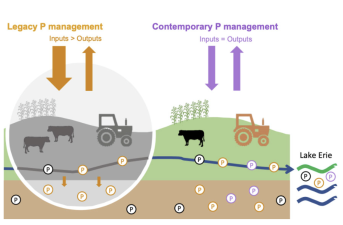
Phosphorus is essential for crop growth, but decades of fertiliser use have left many agricultural soils with excess nutrient build-up. This hidden reserve, often called legacy phosphorus, can remain in the ground for years and later move into waterways through runoff, erosion and drainage. The result is a major environmental challenge for farming regions, especially where soil testing methods do not accurately reflect plant-available phosphorus.
Why phosphorus is applied
Phosphorus is one of the three main plant nutrients, along with nitrogen and potassium. Farmers have long used it as a safeguard against yield loss. Because phosphorus binds strongly to soil, it was once seen as relatively stable and low-risk. However, repeated application over decades has caused accumulation in many productive fields.
Soil build-up and legacy phosphorus
In several agricultural regions, phosphorus levels are now far above crop requirements. In some soils, concentrations are many times higher than what healthy plant growth needs. This excess does not disappear quickly. Instead, it remains stored in the soil and becomes a long-term source of pollution when conditions allow it to move.
Water pollution and ecological impact
When phosphorus reaches rivers, lakes and coastal waters, it can trigger eutrophication. This causes rapid algal growth, oxygen depletion and dead zones that harm fish and other aquatic life. Some blooms also produce toxins that affect drinking water and public health. Warmer temperatures can worsen these effects by lowering oxygen levels in water bodies.
Need for better soil testing
Current soil tests often rely on outdated chemical extraction methods and may not show how much phosphorus plants can actually use. This can lead to unnecessary fertiliser application or missed opportunities to reduce input costs. Improved testing methods aim to measure plant-available phosphorus more accurately and identify fields where fertiliser can be reduced without harming yields.
Last Modified: April 27, 2026