
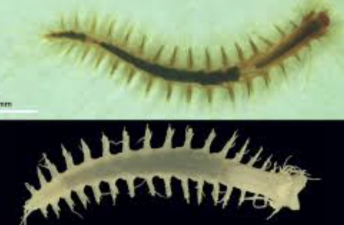
Researchers have identified two new marine worm species, or polychaetes, from the coastal areas of Digha and Bankiput in Purba Medinipur, West Bengal. The discovery adds to the understanding of the northern Bay of Bengal’s hidden marine biodiversity, especially in habitats under heavy human pressure and pollution. The species belong to the nereidid group of annelid worms and were described in a scientific study on marine biodiversity from West Bengal.
Species Identified
- The first species is Namalycastis solenotognatha. Its name refers to its unusual channeled jaw structure.
- The second species is Nereis dhritiae, named in honour of Dhriti Banerjee, the first woman Director of the Zoological Survey of India.
- Both species were found in distinct coastal microhabitats, showing adaptation to difficult environmental conditions.
Habitat and Adaptation
Namalycastis solenotognatha was found in sulphide-rich, foul-smelling mudflats, often on decomposing mangrove wood and hardened clay. Such environments are extreme and low in oxygen. Nereis dhritiae was found inside wooden dock piles on sandy beaches that remain submerged during high tide. Their survival in such settings marks the resilience of polychaetes in stressed coastal ecosystems.
Ecological Importance
- Nereidid worms help in nutrient cycling and sediment aeration.
- They contribute to the overall health of coastal ecosystems.
- Their presence can indicate environmental conditions, making them useful bioindicators.
- They may help scientists monitor pollution and habitat change along the coast.
Significance for Biodiversity Research
The discovery shows that even polluted and heavily used coastal zones can support unique life forms. It also underlines the need for further taxonomic and ecological studies in the Bay of Bengal region. Such findings are important for marine conservation, biodiversity mapping, and long-term monitoring of India’s coastal environment.
Last Modified: April 28, 2026