
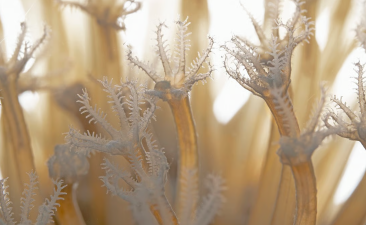
A study published in Science Advances reveals that rising ocean temperatures disrupt the ciliary ventilation system of reef-building corals, particularly Porites lutea. This breakdown leads to fatal oxygen stress when temperatures exceed 37°C. Corals rely on microscopic, hair-like cilia to pump oxygen-rich water across their tissue surfaces. However, extreme heat stress causes these cilia to lose coordination. The resulting failure traps stagnant, oxygen-poor water over the coral, inducing severe tissue hypoxia. This physiological breakdown occurs before mass coral bleaching, revealing a distinct vulnerability pathway that links ocean warming directly to coral suffocation.
The Mechanics of Ciliary Ventilation
Corals are sessile organisms that lack active muscular pumping systems to circulate water. Instead, they rely on a dense layer of microscopic cilia covering their external ectoderm to manage their immediate boundary layer.
Boundary Layer Regulation
The coral boundary layer is a thin layer of stagnant water wrapping the coral tissue. Cilia beat in coordinated waves to create localized currents, constantly replacing this boundary water. This mechanism drives the exchange of dissolved gases, nutrients, and metabolic waste products between the coral and the open ocean.
Oxygen Dynamics and Hypoxia
During daylight hours, symbiotic algae within the coral produce high amounts of oxygen via photosynthesis. At night, or during high-temperature anomalies, the coral relies entirely on ciliary beating to bring in oxygenated water from the outside. When water temperatures surpass 37°C, the rhythmic coordination of the cilia collapses. The water film becomes stagnant, cutting off oxygen diffusion and subjecting the coral tissue to rapid hypoxia (oxygen deprivation).
The Symbiosis Tipping Point
Historically, coral mortality from heat stress was attributed almost entirely to the breakdown of the relationship between the coral host and its symbiotic dinoflagellates (zooxanthellae). This new research establishes that ciliary failure is an independent physiological tipping point. The breakdown of water circulation occurs before the expulsion of algae, meaning corals face a dual threat of suffocation and starvation during marine heatwaves.
Impact on Reef-Building Species
The study focused heavily on Porites lutea, a prominent massive boulder coral found throughout the Indo-Pacific region.
| Coral Response Parameter | Normal Conditions (26°C – 30°C) | Elevated Heat Stress (32°C – 36°C) | Extreme Heat Threshold (>37°C) |
| Cilia Beating Pattern | Metachronal coordination (wave-like, synchronized movement) | Accelerated beating, localized disorientation | Complete discoordination, erratic twitching, or arrest |
| Boundary Layer State | Continuous replenishment, active fluid transport | Weakened circulation, thickening of stagnant water layer | Total stagnation of the boundary layer |
| Tissue Oxygen Levels | Homeostatic balance (optimal respiration and photosynthesis) | Mild oxygen fluctuations, managed oxidative stress | Severe tissue hypoxia, metabolic shutdown |
| Survival Outcome | Active calcification and growth | Initial stress response, potential recovery | Rapid tissue necrosis and accelerated mortality |
Ecological Implications for Marine Ecosystems
The disruption of ciliary ventilation alters how coral reefs interact with changing ocean chemistry, compounding the impacts of global climate change.
Ocean Deoxygenation Synergy
Warming oceans naturally hold less dissolved oxygen. When global ocean deoxygenation combines with the failure of localized coral cilia ventilation, the lack of oxygen inside the coral tissue intensifies. This accelerates reef degradation even in areas where water column oxygen seems adequate.
Mass Bleaching Acceleration
Hypoxic tissues are highly susceptible to cellular damage. The accumulation of metabolic wastes and toxic oxygen radicals within the stagnant boundary layer damages the host coral cells. This internal damage forces the immediate expulsion of zooxanthellae, triggering rapid, widespread bleaching events.
IASPOINT Booster Facts for UPSC
- Porites lutea Profile: Commonly known as hump coral or boulder coral, Porites lutea is a hard, reef-building (hermatypic) coral. It forms massive, dome-shaped colonies that provide critical structural complexity to reef ecosystems.
- Anatomy of Coral Cilia: Cilia are hair-like organelles made of microtubules arranged in a specific “9+2” axoneme structure. They project from the epithelial cells of the coral ectoderm.
- Coral-Algal Symbiosis: Corals share a mutualistic relationship with photosynthetic algae called zooxanthellae (genus Symbiodinium). The coral provides a protected environment and compounds needed for photosynthesis, while the algae supply the coral with glucose, glycerol, and amino acids.
- Bleaching vs. Necrosis: Coral bleaching refers to the loss of symbiotic algae, leaving the white calcium carbonate skeleton visible; the coral is still alive and can recover. Tissue necrosis involves the actual death of the coral animal cells, making recovery impossible.
- Indo-Pacific Coral Reef Biodiversity: The Indo-Pacific region, particularly the Coral Triangle, contains the highest marine biodiversity on Earth. It holds over 75% of all known coral species and more than 3,000 species of reef fish.