
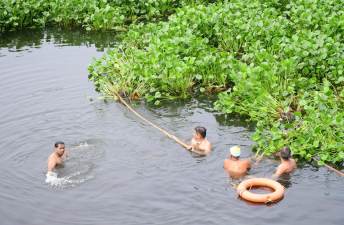
The Nagpur Municipal Corporation has launched an intensive cleanup drive at Ambazari Lake to combat the extensive spread of invasive water hyacinth. Advanced harvester machines and heavy equipment have been deployed to remove the aquatic weeds and restore the lake ecosystem before the monsoon season arrives. These eco-friendly harvesters, procured through funding from the Pradhan Mantri Khanij Kshetra Kalyan Yojana and the District Mineral Foundation, can clear large surface areas daily. The initiative aims to revive the aquatic ecosystem, prevent localized flooding during heavy rains, and enhance the natural heritage site.
Ambazari Lake Geomorphic and Historical Profile
Historical Origin
Ambazari Lake is the oldest and largest of the eleven lakes located in Nagpur, Maharashtra. Built in 1870 during the Bhonsle dynasty rule, the lake was originally constructed to supply clean drinking water to the city. The water was distributed to government officials and prominent residents through an intricate network of clay pipes, serving as Nagpur’s primary water source for over thirty years.
Geographical and Ecological Features
The reservoir is located near the southwestern border of Nagpur, adjacent to the Visvesvaraya National Institute of Technology (VNIT). The lake serves as the primary point of origin for the Nag River, a critical internal drainage waterway of the region. The name “Ambazari” is derived from the Marathi word “Amba,” meaning mango, due to the presence of extensive mango orchards that historically lined the reservoir perimeter.
Water Hyacinth and Ecological Impacts
Botanical Characteristics
Water hyacinth (Scientific name: Pontederia crassipes, formerly Eichhornia crassipes) is a free-floating, perennial aquatic plant belonging to the pickerelweed family (Pontederiaceae). Native to the tropical Amazon Basin of South America, the plant was introduced to India during British colonial rule as an ornamental aquatic species due to its distinct, showy lavender flowers and bulbous leaves.
Proliferation Mechanics
The weed thrives in warm, stagnant, or slow-moving fresh water bodies characterized by high nutrient levels, specifically elevated nitrogen and phosphorus concentrations caused by untreated urban sewage and agricultural runoff. Under optimal conditions, the plant reproduces rapidly through vegetative fragmentation and seed dispersal, capable of doubling its total biomass within five days.
Ecological and Socioeconomic Threats
The unchecked proliferation of water hyacinth creates several severe ecological challenges:
- Eutrophication and Hypoxia: The plant forms thick, dense mats across the water surface that block sunlight from reaching native submerged plants. This cuts off photosynthesis, lowers dissolved oxygen levels, and causes large-scale mortality among fish and other aquatic organisms.
- Vector Breeding Grounds: The stagnant water pockets trapped beneath the dense hyacinth mats serve as prime breeding habitats for mosquitoes and vector-borne pathogens, increasing the incidence of malaria, dengue, and cholera.
- Hydrological Obstruction: The weed chokes water inlets and outlets, drastically reducing the water storage capacity of reservoirs and blocking urban stormwater drainage paths, which triggers upstream urban flooding during the monsoon.
Institutional Financing and Removal Mechanisms
Funding Architecture
The advanced ecological restoration equipment utilized in the Ambazari cleanup is financed through two core mining revenue welfare mechanisms:
| Scheme / Fund | Administrative Nature | Purpose / Core Function |
| Pradhan Mantri Khanij Kshetra Kalyan Yojana (PMKKKY) | Ministry of Mines initiative implemented by District Mineral Foundations. | To implement developmental and environmental welfare projects in mining-affected districts, minimizing adverse impacts. |
| District Mineral Foundation (DMF) | Statutory non-profit body established in every district under the Mines and Minerals (Development and Regulation) Amendment Act, 2015. | Collects a fixed percentage of royalty from miners to utilize for the benefit of affected communities and local environmental restoration. |
Mechanical Harvester Technology
The deployment involves specialized aquatic weed harvesters designed to cut, collect, and store floating vegetation simultaneously. These eco-friendly machines operate without disturbing the lake bed or generating chemical secondary pollutants. The collected biomass is later transferred ashore for dewatering and processing.
IASPOINT Booster Facts for UPSC
- Terror of Bengal: Water hyacinth is widely known as the “Terror of Bengal” due to its catastrophic impact on the freshwater fisheries, wetlands, and rice paddy fields of West Bengal after its historical introduction.
- Phytoremediation Potential: Despite being classified as one of the world’s worst invasive alien species, water hyacinth exhibits high heavy metal accumulation capabilities. It can extract toxic industrial pollutants like cadmium, mercury, and lead from contaminated water bodies through phytoremediation.
- Invasive Species Status: The plant is classified under the top 100 most aggressive global invasive species. In India, similar high-threat invasive weeds include Lantana camara (in terrestrial forests) and Prosopis juliflora (in arid ecosystems).
- Economic Valorisation: Under circular economy models, harvested water hyacinth biomass is increasingly used for the commercial production of organic fertilizers, bio-gas, animal fodder, and hand-woven artisanal handicrafts.
- Kunming-Montreal Global Biodiversity Framework: Target 6 of this global framework explicitly mandates member states to eliminate, minimize, and mitigate the impacts of invasive alien species on native biodiversity by at least 50 percent by the year 2030.