
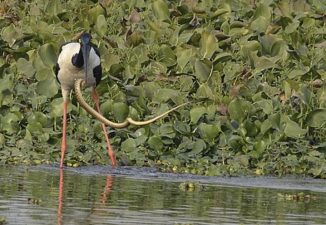
Shekha Jheel Bird Sanctuary in Aligarh, Uttar Pradesh, was designated as India’s 99th Ramsar Site on 22 April 2026. The site is a freshwater perennial lake of about 25 hectares and is linked to the Upper Ganges Canal, which was constructed in 1852.
Ramsar Convention
The Ramsar Convention is an international treaty adopted in 1971 in Ramsar, Iran, for the conservation and wise use of wetlands. Wetlands of International Importance are listed under the convention and are called Ramsar Sites.
Wetland Profile of Shekha Jheel
Shekha Jheel is located in Aligarh district in western Uttar Pradesh. It is the 12th Ramsar Site in Uttar Pradesh and adds to the state’s wetland network under the convention.
Bird Habitat and Flyway Link
The wetland lies on the Central Asian Flyway, which is a major migratory route for birds across Central Asia, the Indian subcontinent, and parts of Africa. The site supports wintering birds such as the Bar-headed Goose, Painted Stork, and several duck species.
Ecological and Geographic Features
Freshwater perennial lakes retain water throughout the year and are important for aquatic biodiversity. Shekha Jheel has a long-standing hydrological connection with canal-fed water systems in the Gangetic plain.
Wetland Concerns
Wetlands in urbanising districts often face habitat loss, pollution, and changes in water flow. A 2025 study on Shekha Jheel noted pressures from rapid urban expansion and industrial growth in Aligarh.
India’s Ramsar Network
India reached 99 Ramsar Sites with the inclusion of Shekha Jheel. Tamil Nadu, Uttar Pradesh, and other states have added multiple wetlands to the national Ramsar list in recent years.
Last Modified: April 23, 2026