
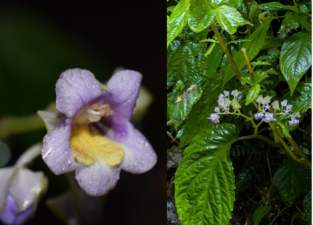
A new plant species with a distinct golden tongue-like floral feature has been discovered in the shaded streamside forests of Arunachal Pradesh. The species, named Stauranthera aureoglossa, was identified during floristic exploration in the Kamle and Upper Subansiri districts of the eastern Himalayas. The finding adds to the botanical diversity known from India’s north-eastern region and marks the ecological value of mid-elevation evergreen forests.
Discovery in Himalayan Forests
The plant was located during a routine survey of damp, rocky habitats near flowing streams and rivulets. It grows as a perennial herb in moist, shaded conditions. Researchers observed that the specimen did not match any previously recorded species, prompting detailed examination and comparison with related plants.
Distinctive Botanical Features
The species is marked by a bell-shaped, bluish-purple flower. Unlike close relatives, it does not have a tubular spur at the base of the flower. Instead, it has a raised, bumpy, yellow patch inside the lower petal lip. This feature inspired the name aureoglossa, meaning golden-yellow tongue-like appendage. The plant also differs from related species in its leaf shape, which is diamond- or spear-shaped rather than ear-shaped and smaller.
Conservation Significance
The species is already under threat in the wild. Only two small populations were recorded, separated by about 20 kilometres, with fewer than 110 individual plants in total. Its habitat is vulnerable to logging, landslides, and road-widening activities. Because of these pressures, the species has been provisionally assessed as endangered.
Importance for Biodiversity Studies
The discovery underlines the need for continued botanical surveys in the Himalayas. It also shows that fragile streamside ecosystems can support highly specialised and rare plant life. Such findings are important for plant taxonomy, conservation planning, and habitat protection in biodiversity-rich regions.
Last Modified: April 25, 2026