
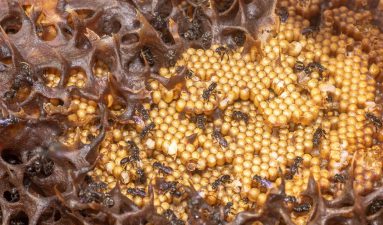
Amazonian stingless bees have become the first insect in the world to receive legal rights after two municipalities in Peru, Satipo and Nauta, passed an ordinance. The move aims to strengthen conservation of a vital pollinator that has supported tropical forests for millions of years and now faces mounting pressure from deforestation, fires and climate change.
Why Stingless Bees Matter
Stingless bees are a group of tropical bees that either lack stingers or have stingers that do not inflict much pain. Around half of the 500 known species are found in the Amazon, and Peru alone has more than 170 species. They have existed for about 80 million years and are among the oldest bee species on Earth.
- They are major pollinators in tropical ecosystems.
- In the Amazon, they pollinate more than 80% of the flora.
- They support crops such as cacao, coffee and avocados.
Ecological And Cultural Significance
Stingless bees are important not only for biodiversity but also for Indigenous communities. Asháninka and Kukama-Kukamiria peoples have long used their honey for medicinal purposes. Recent studies suggest the honey has anti-inflammatory, anti-bacterial and anti-viral properties. Unlike common market honey, it is more watery and has a sweet-sour taste.
Threats To Amazonian Bee Populations
The bees face severe habitat loss in the Amazon. Key threats include:
- Deforestation caused by illegal logging, agriculture and cattle grazing.
- More frequent and intense forest fires.
- Rising temperatures that push bees to higher elevations.
These changes have made the insects harder to find for local communities that depend on them.
What The New Ordinance Provides
Peru had already recognised stingless bees as native species in 2024, which meant they were legally protected. The new municipal ordinance goes further by recognising their inherent rights. These include the right to exist, to maintain healthy populations, to restore habitats and to live in a pollution-free environment. The measure was developed with Indigenous participation and links bee protection with Indigenous cultural rights. Efforts are now under way to make the protection a national law.
Last Modified: April 25, 2026