
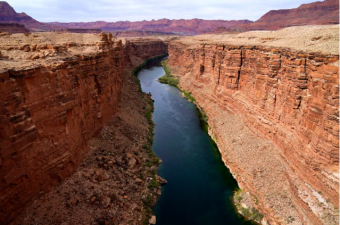
The long-standing mystery of why the Colorado River delivers far less water than winter snowpack suggests has been linked to a warmer, drier spring climate in the American West. New scientific findings show that snowmelt is increasingly being absorbed by mountain vegetation and lost through evaporation before it can reach major reservoirs such as Lake Mead and Lake Powell. This has serious implications for water security across the Colorado River basin, which supports around 40 million people.
What the study found
The research shows that the main cause of the runoff deficit is not snowpack alone, but the interaction between snowmelt, spring rainfall, vegetation, and rising temperatures. When spring precipitation is low, plants begin drawing moisture from melting snow earlier in the season. Clearer skies and stronger solar radiation further increase water loss.
Why snowpack forecasts are failing
For decades, water managers have relied heavily on winter snowpack measurements, especially April 1 snowpack data, to predict summer streamflow. Since 2000, these forecasts have repeatedly overestimated the amount of water reaching rivers. The new findings show that even normal snowpack can produce much lower runoff if spring is dry and warm.
Role of aridification and plant water use
Scientists describe the region as undergoing aridification, not just drought. This means rising temperatures are permanently reducing river flows even when precipitation does not fall sharply. Increased vapour pressure deficit makes plants pull more moisture from soil and snowmelt. Low-elevation basins are especially affected because earlier thaw gives vegetation a longer period to consume water.
Implications for water management
The study suggests that current allocation systems under the Law of the River need revision. Forecast models must include spring weather, vegetation behaviour, and changing plant growth cycles. Without these adjustments, states and Mexico that depend on the river may face deeper shortages and more inaccurate water planning.
Last Modified: April 27, 2026