
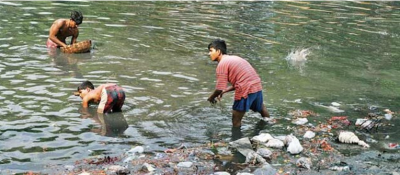
River water contamination by trace metals has emerged as a major public health concern in northern India after a recent study found that children are more vulnerable than adults to non-carcinogenic and carcinogenic risks. The assessment focused on the Betwa–Yamuna confluence in Uttar Pradesh’s Bundelkhand region and examined exposure to metals such as arsenic, lead and cadmium.
Key Findings
- Children showed higher cumulative non-carcinogenic risk than adults.
- Hazard levels crossed safety thresholds in nearly 67 per cent of simulated cases.
- Arsenic exposure indicated a notable carcinogenic risk under real-world conditions.
- The study brought into light that river confluences can intensify contamination through mixing and upstream accumulation.
Methodology Used
The research used advanced risk modelling instead of relying only on average contamination levels. Scientists applied Monte Carlo simulations to capture variation in exposure patterns. The analysis considered factors such as water intake, body weight and seasonal changes in pollution. This approach allowed a more realistic estimate of health risk across different age groups.
Sources Of Pollution
The study identified multiple contributors to heavy metal contamination in the river system. These included agricultural runoff, untreated industrial discharge, thermal power activity and urban sewage. It also linked the problem to the wider Ganga Plain, where sediments can store toxic metals and release them back into water under changing environmental conditions.
Policy Significance
The findings underline the need for targeted action on river water safety, especially where water is used for domestic and agricultural purposes. The study recommends stronger monitoring, source control and an integrated uncertainty-based framework for river health assessment. Such an approach can support evidence-based environmental policy and public health protection in developing regions.
Last Modified: April 28, 2026