
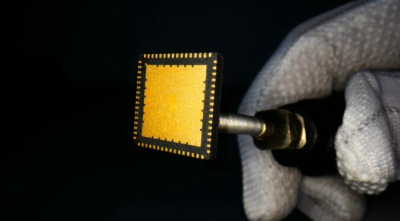
Chennai-based fabless chip designer Mindgrove Technologies has entered into a two-year commercial partnership with Pune-based product design firm Pinetics to develop indigenous system-on-modules (SoMs) for biometric access control, smart locks, cameras, and security devices. Operating out of the IIT Madras Research Park, Mindgrove has developed “Secure IoT”, India’s first commercial-grade high-performance microcontroller system-on-chip (SoC) using the open-source RISC-V architecture. This collaboration marks a practical milestone in bridging India’s chip-to-product gap, transitioning indigenous semiconductor design into finished, market-ready consumer electronic goods while strengthening domestic supply chain resilience.
Core Architecture and Specifications
Mindgrove’s Secure IoT SoC features specific engineering benchmarks tailored for edge devices and connected systems:
- Processor Core: Powered by the indigenous single-core Shakti C-Class 64-bit CPU, utilizing the open hardware RISC-V (RV64GC) instruction set architecture.
- Clock Speed: Operates at a frequency of 700 megahertz (MHz), enabling high-performance processing for embedded systems.
- Fabrication Node: Manufactured using a 28-nanometer (nm) process technology node.
- Power Consumption: Optimized for low-power operation, drawing a peak power consumption of under 200 milliwatts (mW).
- Operating Systems Supported: Built for real-time operating systems (RTOS) like Zephyr, FreeRTOS, and NuttX.
Built-in Hardware Security Features
The silicon architecture integrates cryptographic hardware accelerators directly into the chip to prevent firmware tampering and cyber threats:
- Secure Boot: Seared directly into the silicon to verify code authenticity before execution.
- Cryptographic Engines: Dedicated hardware support for AES-128/192/256, RSA-2048, and SHA-256 protocols.
- Physical Protection: Features a True Random Number Generator (TRNG) alongside FIPS-140-2 certified One-Time Programmable (OTP) memory and Physical Memory Protection (PMP).
Applications and Commercial Viability
The high integration of multiple functions onto a single silicon substrate helps original equipment manufacturers (OEMs) reduce total bill-of-materials (BOM) costs by nearly 30 percent compared to imported alternatives.
| Application Domain | Specific Use Cases |
| Security & Identity | Biometric terminals, fingerprint scanners, smart locks, identity authentication systems for telecom onboarding |
| Consumer Wearables | Smartwatches, fitness trackers, and healthcare monitors |
| Smart Infrastructure | Smart city devices, automated utility meters (gas, water, electricity), and point-of-sale (PoS) machines |
| Automotive & Industrial | Electric vehicle (EV) battery management systems, factory automation sensors, and edge gateways |
Expanding the Indigenous Roadmap
Mindgrove Technologies is also developing a second semiconductor called the “Vision SoC”.
Vision System-on-Chip
This upcoming chip is a gigahertz (GHz) class processor designed to target computer vision and high-performance edge artificial intelligence (AI) workloads. Its target applications include closed-circuit television (CCTV) systems, automotive driver-assistance systems (ADAS), vehicle dashcams, and smart televisions.
Government Policy Support
The development of the Vision SoC receives financial and infrastructure backing from the Government of India under the Design Linked Incentive (DLI) scheme. The DLI scheme is a component of the India Semiconductor Mission (ISM) aimed at nurturing domestic fabless startups through financial incentives and design infrastructure support during various stages of development.
IASPOINT Booster Facts for UPSC
- Fabless Model: A semiconductor business model where a firm designs and sells the hardware but outsources the actual physical fabrication (manufacturing) of the silicon wafers to a specialized foundry.
- RISC-V Architecture: An open-standard Reduced Instruction Set Computer (RISC) architecture provided under open-source licenses. It allows companies to design processors without paying expensive licensing fees to proprietary architecture owners like ARM or Intel.
- Shakti Processor Program: An initiative pioneered by IIT Madras to develop a family of open-source, industrial-grade processors based on RISC-V ISA, supported by the Ministry of Electronics and Information Technology (MeitY).
- Design Linked Incentive (DLI) Scheme: It offers financial incentives of up to 50% of eligible expenditure and deployment-linked incentives of 4% to 6% of net sales over five years to domestic companies engaged in semiconductor design.
- System on Module (SoM): An electronic board that bundles a core processor, memory, and power management onto a single printed circuit board (PCB), allowing device manufacturers to integrate it directly into final products like cameras or biometric scanners without designing the core computing unit from scratch.