
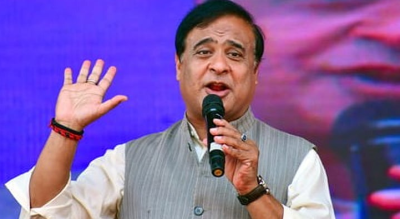
On 13 May 2026, the Assam Cabinet approved the draft Uniform Civil Code (UCC) Bill, scheduled for introduction in the state legislative assembly on 26 May 2026. This legislative measure fulfills a core election commitment of the government following the 2026 assembly elections. The Bill aims to institute a common legal architecture for civil matters, making Assam the third Indian state to formally advance state-level UCC legislation after Uttarakhand and Gujarat.
Constitutional and Legal Framework
The Uniform Civil Code is anchored in the Constitution of India under Part IV, which outlines the Directive Principles of State Policy (DPSPs).
Constitutional Provisions
- Article 44: This article explicitly mandates that the State shall endeavor to secure for the citizens a Uniform Civil Code throughout the territory of India.
- Legal Status of DPSPs: Unlike Fundamental Rights, Directive Principles are non-justiciable under Article 37, meaning they are not legally enforceable by courts. However, they remain fundamental to the governance of the country.
- Seventh Schedule Allocation: Personal laws, including marriage, divorce, inheritance, and succession, fall under Entry 5 of the Concurrent List (List III) of the Seventh Schedule. Consequently, both the Parliament and State Legislatures possess competent jurisdiction to enact laws on these subjects.
Core Pillars of the Draft Assam UCC Bill
The proposed Assam legislation isolates four major domestic and civil sectors for legal standardization:
- Age Standardisation: The Bill legalizes a uniform minimum age for marriage, fixing it at 18 years for women and 21 years for men across all communities.
- Abolition of Polygamy: The code mandates a single-spouse framework, legally prohibiting polygamous marriages regardless of prevailing religious personal laws.
- Gender Equality in Succession: The framework institutes equal inheritance rights, ensuring that spouses, daughters, sons, and parents share ancestral and acquired property equitably.
- Regulation of Live-In Relationships: The draft introduces explicit maintenance rights for women in live-in relationships, guarantees legal legitimacy for all children born out of such unions, and mandates compulsory registration of these relationships within 60 days.
Scope, Exemptions, and State Comparisons
The draft Bill has been modified to address the unique socio-cultural realities and demographic landscape of Assam.
Specific Exemptions
- Tribal Ambit Exclusion: The legislation entirely excludes Scheduled Tribes (ST) and Adivasi communities living in both hill areas (governed by the Sixth Schedule) and plain areas to preserve indigenous customary laws.
- Protection of Faith-Based Rituals: The law does not govern religious rituals, faith practices, or methods of worship. Ceremonies like Islamic Namaz, Hindu Pujas, or Sikh Anand Karaj remain outside state regulatory oversight.
Status of Uniform Civil Laws Across Indian States
| jurisdiction | Legal Origin / Enactment Year | Current Enforcement Status | Core Feature / Distinction |
| Goa | Portuguese Civil Code of 1867 | Enforced continuously since colonial era | Common civil code applies to all residents, but preserves certain limited community-specific customs. |
| Uttarakhand | Enacted in 2024 (Enforced Jan 2025) | Fully operational | First post-independence comprehensive state code; completely exempts scheduled tribes. |
| Gujarat | Passed in 2026 | Pending formalization | State-level code structured to standardize civil laws with local exemptions. |
| Assam | Approved by Cabinet in May 2026 | Tabling scheduled for 26 May 2026 | Targeted code focusing on four primary areas of personal law, with total tribal exemptions. |
Previous Legislative Steps in Assam
The introduction of the UCC Bill follows two legal interventions enacted during the government’s previous tenure:
- Repeal of the 1935 Act: The state repealed the British-era Assam Muslim Marriages and Divorces Registration Act, 1935, to curb child marriage practices.
- Anti-Polygamy Law: The state assembly enacted dedicated legislation to prohibit and eliminate polygamy across the state, laying the groundwork for the comprehensive civil code.
IASPOINT Booster Facts for UPSC
- The Shah Bano Case (1985): The Supreme Court of India observed that Article 44 had remained a dead letter and called for the implementation of a UCC to aid national integration.
- Sarla Mudgal Case (1995): The apex court reiterated the need for a UCC to prevent the practice of changing one’s religion solely to solemnize a second marriage under personal laws.
- Paulo Coutinho v. Maria Luiza Valentina Pereira (2019): The Supreme Court hailed the Goa Civil Code as a shining example of a functioning UCC, noting that it protects property rights and bars triple talaq.
- Law Commission Viewpoints: The 21st Law Commission of India stated in 2018 that a UCC was “neither necessary nor desirable at this stage.” However, the Centre constituted the 23rd Law Commission to re-examine uniform personal laws across the nation.
- Demographic Context: Assam possesses a tribal population of approximately 12.45% and a Muslim population of 34.22% based on the 2011 Census, making it the first state with this specific demographic profile to initiate state-level UCC legislation.