
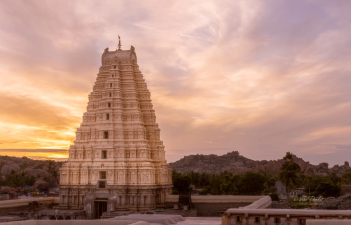
The Archaeological Survey of India (ASI) recently dismantled concrete walls built inside the main gopuram (gateway tower) of the historic Virupaksha Temple in Hampi, Karnataka. These structures had enclosed an ancient mantapa (pillared hall) for decades to run an administrative office, blocking the original architectural layout. The restoration has made the mantapa visible again, reopening a traditional resting place for devotees that houses a Shiva idol. Alongside this project, the ASI cleaned and restructured the nearby Kari Thiruvengalanatha Temple premises to prevent encroachment and protect the micro-ecosystem of the UNESCO World Heritage site.
Architectural Profile of Virupaksha Temple
The Virupaksha Temple is the oldest functional temple complex at Hampi, serving as a continuous center of worship since the 7th century CE.
The Main Gopuram (Bistappa Gopuram)
The eastern gateway tower, known as the Bistappa Gopuram, stands over 50 meters tall and consists of nine tiers. The lower two tiers are built of solid granite block masonry, while the upper seven tiers feature brick and stucco sculpture work. The recently restored mantapa sits within the granite base of this massive entrance structure, acting as the formal transitional porch for pilgrims entering the outer courtyard.
Structural Elements of the Complex
- Sanctum Sanctorum: Houses the Virupaksha linga, an aspect of Lord Shiva.
- Ranga Mantapa: A pillared central hall added by King Krishnadevaraya in 1510 CE to celebrate his coronation, famous for its intricate ceiling paintings.
- Kalyana Mantapa: A dedicated hall used for ceremonial marriage rituals of the deity.
- Pampa Tirtha: A sacred water tank linked to the temple via underground stone channels.
Vijayanagara Architectural Style
The Virupaksha Temple reflects the evolution of the Vijayanagara school of architecture, which blended elements of Chalukya, Hoysala, Pandya, and Chola styles.
| Architectural Feature | Description and Engineering Details |
| Material Usage | Hard granite stone quarried locally from the Hampi landscape for structural pillars, walls, and basements. |
| Yali Pillars | Monolithic pillars carved with biological mythical beasts combining features of horses, lions, and elephants. |
| Pushpapotikas | Intricate lotus-bud corbels carved on top of pillars to support the heavy stone beams. |
| Sukhasi Panels | Highly decorated projection panels placed above the entrance to the vestibule. |
Related Conservation Actions: Kari Thiruvengalanatha Temple
The ASI extended its cleanup and restoration drive to the Kari Thiruvengalanatha Temple complex, located a short distance from the main Virupaksha bazaar. This structure had faced severe neglect, leading to illegal activities and thick vegetation growth that threatened the stone foundations. Laborers removed wild roots, cleared modern debris, and set up security barriers to protect the ornate stone carvings and maintain the historical integrity of the monuments.
Conservation Methodology Used by ASI
The restoration followed strict international heritage conservation protocols to preserve the ancient fabric without adding modern elements.
Selective Demolition
Workers used hand tools instead of heavy machinery to remove the brick and cement partition walls from the gopuram. This prevented structural vibrations from traveling through the 500-year-old granite pillars.
Mortar Matching
Any gaps or structural weak points found after removing the modern walls were filled using traditional lime-mortar mixes. This compound matches the breathability and flexibility of the original Vijayanagara-era mortar, keeping moisture from getting trapped inside the stone blocks.
IASPOINT Booster Facts for UPSC
- UNESCO World Heritage Status: The Virupaksha Temple is a core part of the Group of Monuments at Hampi, which UNESCO designated as a World Heritage Site in 1986.
- The Inverted Shadow Phenomenon: The main gopuram features a unique engineering trick. Sunlight passes through a small slot in the eastern wall, projecting an inverted shadow of the massive tower onto the western wall of the inner courtyard.
- Pampa-Kshetra: The region around the temple is historically called Pampa-Kshetra, named after Pampa, the daughter of Lord Brahma who performed penance here for Lord Shiva. The word ‘Pampa’ later evolved into ‘Hampi’.
- The Archaeological Survey of India (ASI): Founded in 1861 by Alexander Cunningham, who also served as its first Director-General, the ASI is an attached office under the Ministry of Culture. It regulates all archaeological activities in India under the Ancient Monuments and Archaeological Sites and Remains (AMASR) Act, 1958.
- Royal Patronage: While the temple pre-dates the Vijayanagara Empire, it underwent major expansions under Harihara I and later rulers, eventually becoming the principal royal chapel for the Vijayanagara kings.