
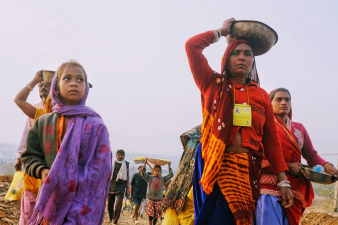
In Borpada village of Jhabua district, Madhya Pradesh, the Bhil tribal community recently revived their traditional “Halma” practice to tackle a severe water crisis. Facing a dried up, silted, and long neglected village well, the residents chose self-reliance over waiting for government aid. They pooled their collective labor without any monetary wages or formal leadership to clean, desilt, and restore the well. This indigenous water conservation effort highlights the community’s mutual cooperation, trust, and shared responsibility in managing local natural resources during times of environmental distress.
Core Concept and Mechanics of Halma
Definition and Philosophy
Halma is an ancient, unpaid, collective community work tradition practiced by the Bhil and Bhilala tribes of Central India. The core philosophy rests on the principle of reciprocal support and voluntary labor. When an individual, a family, or the entire village faces a challenge that is too large for them to handle alone, the community gathers to solve it collectively.
Operational Framework
The tradition operates entirely without formal leaders, contractors, or monetary wages. A village elder or a family in need simply calls for a Halma. The community responds based on mutual trust. Participants bring their own tools, such as spades, pickaxes, and baskets. The only obligation for the host family or village is to provide a community meal to the volunteers at the end of the day’s work.
Key Applications of Halma
- Water Conservation: Desilting wells, deepening ponds, digging contour trenches, and building small check dams to retain rainwater.
- Agricultural Operations: Helping small farmers with land clearing, sowing, and harvesting during short agricultural windows.
- Housing and Infrastructure: Constructing or repairing mud houses, cattle sheds, and clearing village pathways after heavy rains.
- Social Support: Assisting families during weddings, funerals, or unexpected personal crises.
Environmental and Social Benefits
Indigenous Water Management
The Jhabua region is historically prone to drought and possesses gravelly, undulating terrain where rainwater runs off rapidly. Halma serves as an eco-friendly tool for rainwater harvesting. By deepening water bodies through voluntary labor, the community prevents groundwater depletion, improves soil moisture, and revives dried-up aquifers without relying on heavy machinery or causing ecological damage.
Strengthening Social Cohesion
Halma eliminates socio-economic disparities within the tribal setup. Since rich and poor members labor side by side without a hierarchy, it reinforces equality and community bonds. The tradition ensures a strong social safety net, making vulnerable tribal households less dependent on local moneylenders or exploitative labor systems during periods of crisis.
Comparative Overview of Similar Tribal Traditions in India
| State | Tribe | Traditional Practice | Primary Focus |
| Madhya Pradesh | Bhil / Bhilala | Halma | Water conservation, farming, and housing |
| Meghalaya | Khasi / Jaintia | Boom Shnong | Community cleaning and village infrastructure |
| Mizoram | Mizo | Tlawmngaihna | Selfless service and community welfare |
| Nagaland | Ao / Angami | Nomadic/Community Labor Teams | Managing jhum (slash-and-burn) cultivation |
| Jharkhand | Santhal | Madait | Mutual aid in agricultural operations |
IASPOINT Booster Facts for UPSC
- The Bhil Tribe: They are one of the largest tribal groups in India, primarily inhabiting Madhya Pradesh, Gujarat, Rajasthan, and Maharashtra. They are historically known for their excellent archery skills.
- Geographical Focus: Jhabua district lies in the western part of Madhya Pradesh, bordering Gujarat and Rajasthan. It forms part of the Jhabua hills agro-climatic zone.
- Constitutional Status: The areas inhabited by the Bhils in Jhabua are protected under the Fifth Schedule of the Constitution of India, which deals with the administration of Scheduled Areas and Scheduled Tribes.
- Bhagoria Festival: This is a famous cultural festival celebrated by the Bhil and Bhilala tribes in Madhya Pradesh, coinciding with the harvesting season and the Holi festival.
- Pithora Paintings: A highly ritualistic wall painting tradition practiced by the Bhil tribe, characterized by vibrant depictions of horses and nature, used to thank deities for fulfilling wishes.
