
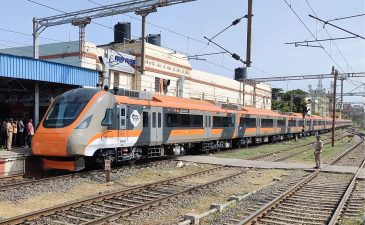
The Namo Bharat Rapid Rail project was inaugurated by Prime Minister Narendra Modi on April 24, 2025. This initiative aims to enhance connectivity between Jaynagar and Patna. It is part of a broader development strategy for the Mithilanchal region, which is gearing up for elections. The project signifies a substantial investment of Rs 13,840 crore in local infrastructure and services.
Overview of the Namo Bharat Rapid Rail
The Namo Bharat Rapid Rail is a fully air-conditioned train. It connects Jaynagar, near the Nepal border, to Patna, the state capital. This service is the second of its kind, following the launch between Ahmedabad and Bhuj. The train features modern amenities such as ergonomic seating and advanced sanitation systems. It is designed to run at speeds of up to 116 km/h, reducing travel time to five and a half hours.
Key Features and Benefits
This train offers various features aimed at passenger comfort and safety. It includes CCTV surveillance, fire detection systems, and an emergency communication system. The train can accommodate approximately 2,000 passengers across its 16 coaches. Its introduction is expected to stimulate local economies by improving access to markets in Patna for small-scale industries.
Impact on the Mithilanchal Region
The Namo Bharat Rapid Rail is crucial for the Mithilanchal region, which includes districts like Darbhanga and Madhubani. Enhanced connectivity is likely to promote economic growth in sectors such as handicrafts and agriculture. It also caters to the needs of travellers from Nepal, encouraging cross-border cultural and familial ties.
Political Context and Implications
The timing of the rail project aligns with the upcoming Bihar elections. The Bharatiya Janata Party (BJP) is focusing on strengthening its voter base in traditionally supportive areas. The announcement is seen as a strategic move to counter opposition parties, particularly the Rashtriya Janata Dal (RJD), which has made similar promises for regional development.
Future Prospects
The Namo Bharat Rapid Rail is expected to set a precedent for future transport projects in Bihar. Its success could lead to further investments in infrastructure, enhancing the overall quality of life in the region. The initiative reflects a growing emphasis on modernising transport systems in less developed areas.
Questions for UPSC:
- Critically analyse the impact of the Namo Bharat Rapid Rail on the socio-economic landscape of the Mithilanchal region.
- Explain the significance of improved rail connectivity in promoting regional development and integration in India.
- What are the potential challenges in implementing large-scale infrastructure projects like the Namo Bharat Rapid Rail? Discuss with suitable examples.
- Comment on the role of transport infrastructure in shaping electoral outcomes in India. How does it influence voter behaviour?
Answer Hints:
1. Critically analyse the impact of the Namo Bharat Rapid Rail on the socio-economic landscape of the Mithilanchal region.
- Enhances accessibility to Patna, reducing travel time from eight to five and a half hours.
- Stimulates local economies by improving market access for small-scale industries, handicrafts, and agriculture.
- Encourages tourism and cross-border travel, particularly for passengers from Nepal.
- Promotes regional development through substantial investments (Rs 13,840 crore) in infrastructure.
- Potentially increases employment opportunities in the region due to improved connectivity.
2. Explain the significance of improved rail connectivity in promoting regional development and integration in India.
- Facilitates faster movement of goods and people, enhancing trade and commerce.
- Reduces regional disparities by connecting remote areas with urban centers.
- Encourages investment in local industries and infrastructure due to improved logistics.
- Strengthens cultural ties and social integration among different regions.
- Supports government initiatives for balanced regional development and growth.
3. What are the potential challenges in implementing large-scale infrastructure projects like the Namo Bharat Rapid Rail? Discuss with suitable examples.
- Land acquisition issues can lead to delays and protests from local communities.
- Financial constraints and budget overruns may jeopardize project completion.
- Environmental concerns and regulatory hurdles can impede construction processes.
- Technological challenges related to safety and efficiency need to be addressed.
- Political opposition and changing government priorities can affect project continuity.
4. Comment on the role of transport infrastructure in shaping electoral outcomes in India. How does it influence voter behaviour?
- Improved transport infrastructure often correlates with enhanced public perception of government performance.
- Connectivity projects can directly influence voter sentiment by addressing local needs and aspirations.
- Political parties leverage infrastructure development as a campaign tool to gain electoral support.
- Accessibility to markets and services can sway voters towards parties promising development.
- Transport projects can also create a sense of urgency and relevance in electoral discourse.