
India holds nearly 8% of the world’s recorded species while occupying just 2.4% of the global land area, making its ecological protection systems critical for global sustainability. The country’s biological resources support food security, rural livelihoods, and climate resilience across diverse ecosystems, including four global biodiversity hotspots. Governed by the Biological Diversity Act of 2002, which was modified through the Biological Diversity (Amendment) Act of 2023, India operates a decentralized three-tier statutory framework to regulate access to biological resources. This system balances ecological preservation with economic utilization while fulfilling international treaties like the Kunming-Montreal Global Biodiversity Framework.
Statutory Architecture and Three-Tier Governance
India regulates its biological wealth through a decentralized, legal structure established under the Biological Diversity Act, 2002. This structure operates at national, state, and local levels to enforce conservation rules and manage Access and Benefit Sharing (ABS).
National Biodiversity Authority (NBA)
The NBA is a statutory autonomous body established in 2003 and headquartered in Chennai, Tamil Nadu. It performs facilitative, regulatory, and advisory functions for the Government of India on issues of conservation, sustainable use, and equitable sharing of benefits. Anyone who is not a citizen of India, or any foreign entity, must obtain prior approval from the NBA before securing or using biological resources or associated traditional knowledge found in India.
State Biodiversity Boards (SBBs)
SBBs operate in all 28 states to advise state governments on conservation guidelines. They regulate commercial utilization, bio-survey, and bio-utilization of biological resources by Indian citizens. The 2023 amendment clarifies that Indian entities do not need to give prior intimation to SBBs for accessing cultivated medicinal plants, which simplifies compliance for traditional medicine manufacturers.
Biodiversity Management Committees (BMCs)
BMCs are established by local bodies in every state at the panchayat, municipality, and district levels. They are responsible for promoting conservation, sustainable use, and documentation of biological diversity. BMCs preserve local varieties of crops, domesticated livestock breeds, and traditional knowledge. They also levy collection fees from persons accessing biological resources from their territorial jurisdiction.
International Alignments and Legal Protocols
India aligns its domestic policies with major international environmental treaties to contribute to global conservation targets.
Convention on Biological Diversity (CBD) and Nagoya Protocol
India ratified the CBD in 1994, which led directly to the enactment of the domestic Biological Diversity Act. It also ratified the Nagoya Protocol on Access and Benefit Sharing in 2014. The domestic legal framework implements the Nagoya Protocol by ensuring that commercial users share financial and non-financial benefits with local communities who preserve traditional ecological knowledge.
Kunming-Montreal Global Biodiversity Framework (KMGBF)
Adopted in 2022 at COP15, the KMGBF sets 4 overarching goals and 23 targets to be achieved by 2030. India actively updates its National Biodiversity Strategy and Action Plan (NBSAP) to meet these targets. The primary global goal is Target 3, known as the 30×30 target, which aims to bring 30% of the world’s degraded land and marine ecosystems under effective conservation management by 2030.
Key Digital Mechanisms and Documentation Fieldwork
India utilizes technology and grassroots data collection to maintain a transparent, verifiable record of its natural resources.
People’s Biodiversity Registers (PBRs)
PBRs are comprehensive statutory documents prepared by local BMCs with assistance from technical support groups. They record data on available biological resources, their medicinal or commercial uses, and the traditional knowledge associated with them. More than 2.77 lakh PBRs have been prepared across rural and urban local bodies, creating a baseline to prevent bio-piracy.
ABS e-Filing Portal
The NBA operates a centralized electronic filing portal that processes applications for accessing biological resources and intellectual property rights. This system tracks applications, automates fee collection, and calculates benefit-sharing obligations. It shortens approval timelines for domestic industries while ensuring that a portion of the commercial revenue flows back to the specific BMC where the resource originated.
Conservation Achievements and Forest Classifications
India protects its species through a network of designated zones and targeted conservation programs.
Protected Area Network
The country manages a vast network of protected zones that cover approximately 5.28% of its total geographical area.
| Category of Protected Area | Total Count | Core Objective |
| National Parks | 106 | Highest protection level; no human grazing or private land rights allowed. |
| Wildlife Sanctuaries | 573 | Species-specific protection; limited traditional rights and timber collection permitted. |
| Conservation Reserves | 115 | Buffer zones linking protected areas; owned entirely by the government. |
| Community Reserves | 220 | Protected zones established on private or community lands with local consent. |
Species Recovery and Target Milestones
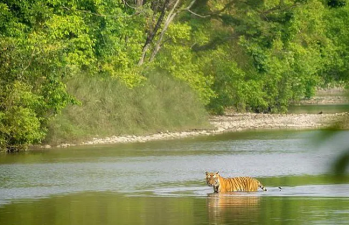
- Project Tiger: Launched in 1973, it now covers over 55 Tiger Reserves. India holds over 75% of the wild tiger population globally.
- Project Elephant: Launched in 1992 to protect migratory corridors and mitigate human-elephant conflict across 33 designated Elephant Reserves.
- Asiatic Lion and Rhino Projects: Targeted habitat management in Gir National Park (Gujarat) and Kaziranga National Park (Assam) has led to stable population recoveries for both the Asiatic Lion and the Greater One-Horned Rhinoceros.
IASPOINT Booster Facts for UPSC
- Biodiversity Heritage Sites (BHS): Under Section 37 of the Biological Diversity Act, state governments can notify areas of unique ecological importance as BHS. Nallur Tamarind Grove in Bengaluru, Karnataka, was the first designated BHS in India. Mahendragiri Hill in Odisha and Gandhamardan Hill in Odisha are recent additions.
- Ex-situ Conservation Centers: India maintains several facilities for conserving species outside their natural habitats. These include the Central Zoo Authority (CZA), the National Gene Bank at the National Bureau of Plant Genetic Resources (NBPGR) in New Delhi, and the Rajiv Gandhi Centre for Biotechnology.
- Exemptions Under the 2023 Amendment: The Biological Diversity (Amendment) Act, 2023 exempts registered AYUSH practitioners and local people who practice traditional medicine from paying ABS or seeking prior permission for domestic commercial utilization.
- Normally Traded Commodities (NTC): The central government declares certain biological resources as NTCs under Section 40 of the Act. Once listed, these resources are exempt from the strict provisions of the Act, which facilitates regular export trade for agricultural commodities like basmati rice and spices.
- International Big Cat Alliance (IBCA): Launched by India, this global alliance works to conserve seven major big cats: Tiger, Lion, Leopard, Snow Leopard, Puma, Jaguar, and Cheetah. Its headquarters are located in India.