
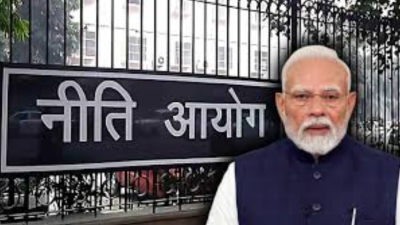
Prime Minister Narendra Modi chaired the 11th Governing Council Meeting of NITI Aayog on June 11, 2026, at the Rashtrapati Bhavan Cultural Centre in New Delhi. Convened around the central theme “Inclusive Human Development for Viksit Bharat @2047,” the apex policy-making assembly focused on engineering institutional pathways for equitable, pan-India socio-economic growth. The high-level meeting brought together State Chief Ministers, Lieutenant Governors of Union Territories, Union Ministers serving as ex-officio members, and senior developmental specialists. Deliberations centered on translating long-term national macroeconomic targets into precise, sub-national operational milestones while finalizing a rigid implementation roadmap to secure foundational human capital, sustainable livelihoods, and universal social dignity by 2047.
Core Pillars of the Inclusive Human Development Framework
Foundational Human Capital and Future-Ready Skills
The council prioritized restructuring the domestic educational ecosystem to withstand the disruptions of automation and shifting global supply networks. This pillar mandates upgrading primary and secondary school infrastructures, adopting cognitive-heavy pedagogical tools, and creating an agile national skilling architecture. It emphasizes integrating artificial intelligence competencies, clean energy vocations, and high-tech manufacturing traits directly into state-level school curricula to transform the demographic dividend into a globally competitive asset.
Productive Employment and Decentralised Growth
The assembly analyzed structural metrics to transition the domestic workforce from subsistence agrarian labor to high-yield industrial and service sectors. Discussions focused on lifting regulatory barriers for regional MSMEs and startups, optimizing rural industrial cluster models, and diversifying economic activity beyond metropolitan limits. The goal is to stimulate a decentralized entrepreneurship movement that creates formal local jobs, stabilizes internal migration patterns, and minimizes interstate economic divergence.
Health, Nutrition, and Wellbeing
The third pillar outlines an integrated model for universal healthcare delivery, aiming to expand primary healthcare networks, advance telemetry and medical digital tools, and implement preventive health protocols. The framework tackles regional nutritional vulnerabilities, micro-nutrient deficiencies, and maternal healthcare gaps by optimizing public distribution networks and local community healthcare channels to drive down out-of-pocket medical expenditure for lower-income brackets.
Equity and Dignity for All
This pillar institutes a policy layer ensuring marginalized, tribal, rural, and minority communities receive unhindered, equal access to public goods, digital connectivity, and clean utilities. The council reviewed legal and operational safety nets designed to prevent economic exclusion based on geography or gender, striving to increase the female labor force participation rate to 50% as a core benchmark for a developed nation status.
Operational Enablers and Implementation Roadmap
Digital Public Infrastructure (DPI) Integration
The council recognized India’s open-source Digital Public Infrastructure (DPI) as the primary engine for social welfare distribution and governance. The implementation roadmap dictates utilizing unified identity, data exchange, and financial transaction platforms to automate direct benefit transfers, verify skilling credentials, and render public services without intermediate leakages.
Data-Driven Systems and Accountability
To ensure transparency, NITI Aayog established a tracking mechanism that utilizes real-time, data-driven systems. This structure breaks down the broader 2047 target into short-term (annual), medium-term (5-year), and long-term (decade-long) sub-indicators. Progress will be continuously monitored using institutionalized performance indexes to enforce absolute administrative accountability across all governing tiers.
Integration of State Visions and the Chief Secretaries Report
Convergence of Sub-National Frameworks
A primary objective of the 11th Governing Council meeting was to harmonize individual state-level planning blueprints with the overarching national roadmap. NITI Aayog will provide specialized technical expertise to state planning boards, helping local administrations realign their budgetary outlays and infrastructure policies with the inclusive human capital parameters of Viksit Bharat.
Core Focus Themes from the 5th National Conference of Chief Secretaries
The Governing Council formalized and integrated the granular operational insights derived from the 5th National Conference of Chief Secretaries held in December 2025. The policy translation incorporates five specialized institutional tracks:
| Focus Track | Primary Structural Objective | Target Mechanism |
| Early Childhood Education | Cognitive foundation development | Revamping Anganwadis into high-yield pre-school learning centers. |
| Schooling | Quality enhancement of primary education | Enforcing structural learning blocks under the NEP 2020 framework. |
| Skilling | Labor market preparedness | Building a future-ready workforce aligned with new-age industrial demands. |
| Higher Education | Transitioning to a knowledge-driven economy | Expanding institutional autonomy and funding for high-tier applied research. |
| Sports & Extracurricular | Holistic human development | Creating grassroots talent pipelines to integrate sports into formal education. |
IASPOINT Booster Facts for UPSC
- Composition of NITI Aayog Governing Council: The council comprises the Prime Minister of India (as Chairperson), Chief Ministers of all States, Chief Ministers of Union Territories with Legislatures (Delhi, Puducherry, and Jammu & Kashmir), and Lieutenant Governors of other Union Territories, along with designated Union Ministers.
- Viksit Bharat Macro Target: The economic blueprint for Viksit Bharat @2047 targets transforming India into a $30 trillion developed economy with a multi-fold expansion in per capita GDP by the centenary year of independence.
- Team India Hub: NITI Aayog houses two dedicated structural hubs: the Team India Hub, which leads the engagement with state governments, and the Knowledge and Innovation Hub, which drives the think-tank capabilities of the organization.
- Cooperative vs. Competitive Federalism: NITI Aayog executes a dual-mandate policy; it drives cooperative federalism through joint platforms like the Governing Council and fosters competitive federalism by publishing indices like the Sustainable Development Goals (SDG) India Index and the India Innovation Index.