
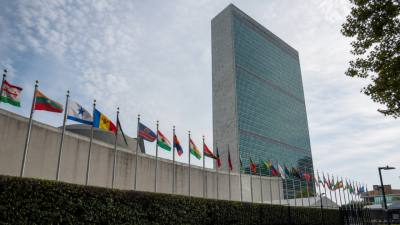
India rejected a draft on Security Council reform as “grossly inadequate, bordering on failure” if expansion is confined to non‑permanent seats. Ambassador Harish Parvathaneni made the remarks during Inter‑Governmental Negotiations in New York and called for structured, text‑based discussions and expansion of both permanent and non‑permanent categories.
What is the issue
The United Nations Security Council retains a post‑1945 architecture. Debate centres on whether to expand membership, change veto arrangements, and alter decision‑making to match current geopolitics. Recent IGN sessions focus on modalities; India opposes proposals that limit change to only non‑permanent seats.
Why it matters
- Global governance: Council legitimacy and authority depend on representative membership and inclusive decision‑making.
- Peace and security: Veto and narrow composition can cause paralysis in crises and limit the Council’s crisis‑response capacity.
- India’s strategic stakes: Permanent membership would increase India’s influence on sanctions, peacekeeping mandates and counter‑terrorism policy.
India’s position
- Comprehensive expansion: India insists on enlargement of both permanent and non‑permanent categories to alter the P5 decision structure.
- Text‑based negotiations: India demands structured IGN work on a formal draft text rather than informal exchanges.
- Rejection of Elements Paper: India says the Elements Paper does not reflect negotiations or widespread support for permanent expansion.
- G4 alignment: India acts within the G4 (Brazil, Germany, Japan) which seeks permanent and non‑permanent expansion.
Key obstacles to reform
| Stakeholder | Position | Practical obstacle |
|---|---|---|
| P5 | Protect current privileges; resistant to diluting veto | Requirement of P5 agreement for charter amendment; political costs |
| G4 | Advocates new permanent members and non‑permanent expansion | Requires coalition‑building and regional support |
| Uniting for Consensus (UfC) | Opposes new permanent members; prefers more non‑permanent seats | Blocks consensus; regional rivalries exploited |
| Member states broadly | Divergent regional demands and voting thresholds | Complex amendment procedures; lack of common text |
Procedural and political constraints
- Ignition by IGN: IGN has produced discussions but lacks a consolidated legal text; India seeks text‑based progress.
- Charter amendment path: Changes to permanent membership or veto require two‑thirds General Assembly support and ratification by two‑thirds of members including all P5.
- Voting politics: Regional group competition and bilateral rivalries complicate candidatures and consensus.
Implications of reform
- Legitimacy: Broader permanent representation would strengthen Council authority and acceptance of its decisions.
- Effectiveness: Inclusion of major stakeholders could reduce diplomatic bottlenecks, but effectiveness also depends on working methods and willingness to act.
- Veto question: Mere expansion without changes to veto use may preserve paralysis; options include veto‑restraints, code of conduct, or qualified majority for certain actions.
- India’s gains: Permanent membership would enlarge India’s role in norm‑setting, peacekeeping, counter‑terrorism, and climate‑security diplomacy; it would also carry responsibilities for contribution to collective security.
Recent developments and signals
- Elements Paper controversy: India says the paper understates support for permanent expansion and calls for formal text‑based IGN work.
- Germany’s non‑permanent defeat: In WEOG elections, Portugal and Austria won seats while Germany secured 104 votes against a 127 threshold. The result is a diplomatic setback for a G4 member and illustrates the competitive, unpredictable nature of Council politics.
- Political reading: Germany’s defeat highlights that even strong aspirants face regional politics and voting blocs; it may increase calls for structural reform to reduce zero‑sum contests.
Model Questions
- Examine the imperative for reforming the United Nations Security Council in the 21st century. Discuss India’s advocacy for expansion of both permanent and non‑permanent categories. [GS-II: International Relations]
- Analyse the primary impediments to comprehensive Security Council reform, considering divergent positions of key groupings such as the G4 and Uniting for Consensus. [GS-II: Governance]
- To what extent would a reformed Security Council contribute to more effective global governance and conflict resolution? Discuss implications for India’s foreign policy objectives. [GS-II: International Relations]
- Analyse the implications of Germany’s recent failure to secure a non‑permanent Security Council seat for the broader movement towards Council reform. [GS-II: International Relations]
Reform is necessary because the Council’s post‑1945 composition misaligns with current power distribution, producing legitimacy deficits and decision‑making gridlock due to the P5 veto. India argues expansion of both permanent and non‑permanent seats to reflect rising powers, improve regional representation, and alter P5 dominance. Permanent inclusion of major regional states would enhance the Council’s authority and India’s ability to shape peace and security outcomes.
Main impediments are P5 reluctance to dilute veto rights; deep divisions between proponents of new permanent seats (G4) and opponents (UfC); regional rivalries; absence of a consolidated text in IGN; and the Charter amendment threshold requiring broad GA approval plus P5 ratification. Political costs for P5 and competing national interests make a negotiated, legally binding reform package elusive.
A reformed Council with wider representation would likely improve legitimacy and acceptance of decisions, aiding collective action on conflicts, sanctions and peacekeeping. Effectiveness depends on accompanying changes in working methods and veto use. For India, permanent membership would increase policy influence, enable proactive engagement on regional security, and align multilateral responsibilities with its economic and strategic weight.
Germany’s defeat underscores competitive electoral dynamics and regional coalition influence in Council contests. It weakens a prominent G4 partner, complicates consensus on permanent expansion, and reveals limits of bilateral influence. The outcome may strengthen arguments for structural reform to reduce zero‑sum competition, but also signals that political mobilisation and regional diplomacy remain decisive in reform trajectories.