
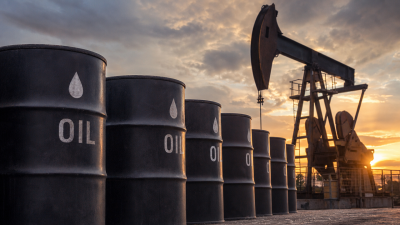
OECD oil stocks fell in May 2026 to their lowest level since 1990 as global inventories declined by 143 million barrels in May. Flows through the Strait of Hormuz began partial recovery after a proposed US–Iran interim agreement, while the IEA coordinated large emergency reserve releases.
Current status
Global observed oil stocks declined by 143 million barrels in May, a drawdown of about 4.6 million barrels per day. Since the Middle East conflict began, inventories have fallen on average by 3.8 million barrels per day. OECD stocks reached their lowest level since 1990. Prices have eased to around USD 81–82 per barrel by mid‑June.
Why this matters for governance and economy
- Market stability: Falling inventories increase vulnerability to new supply shocks and amplify price swings.
- Fiscal and macro impact: Price volatility affects subsidy burden, excise revenues, inflation and the current account.
- Energy security: Import‑dependent economies face supply risk and must manage strategic reserves and procurement.
- International relations: Choke point disruptions and emergency releases require diplomatic coordination and coalition action.
Geopolitical drivers and choke points
The Middle East conflict and temporary closure of the Strait of Hormuz were primary drivers of the recent stock drawdown. Hormuz remains a critical transit route for Persian Gulf exports. Recovery of flows from a May low of 9.6 million barrels per day to about 12 million barrels per day is under way, but mine clearance, insurance, and supply‑chain normalisation will delay full recovery.
Demand and supply dynamics (IEA outlook)
- Demand 2026: IEA cut its global oil demand forecast for 2026 by 1.1 million barrels per day, marking the first quarterly demand fall since 2020.
- Supply 2026: Global supply is forecast to fall by 3.9 million barrels per day to about 102.4 million barrels per day.
- Outlook 2027: The IEA projects a large supply increase in 2027 (about 8 million barrels per day) versus demand growth of about 2 million barrels per day, which could allow inventory replenishment.
International responses: IEA and OPEC+
- IEA emergency action: Coordinated an extraordinary release of 400 million barrels; 252 million barrels were injected by 12 June to dampen market stress.
- OPEC+ adjustments: A decision to adjust production by 188,000 barrels per day for July continued the phased rollback of voluntary cuts.
- Assessment: Emergency releases and OPEC+ moves provided short‑term supply relief and contributed to recent price falls. However, operational and political constraints limit how quickly physical flows and inventories can return to pre‑shock levels.
Price movements and economic implications
Brent and North Sea Dated crude have fallen from April peaks to roughly USD 81–82 per barrel. The downward move reflects expectations of restored flows through Hormuz and emergency reserve injections. For importers, price declines lower immediate fiscal pressure but do not remove strategic risk from depleted inventories. Exchange rate volatility and insurance costs for shipping remain concerns.
Implications for India
- Import dependence: India relies heavily on crude imports for domestic consumption. Supply disruptions raise fuel import bills and fiscal exposure.
- Strategic reserves: India’s SPR mechanism (ISPRL) provides reserve cover and can be used as a buffer, but capacity is limited relative to national consumption.
- Refining and procurement: Diversifying suppliers, flexible long‑term contracts, and parity procurement terms reduce short‑term risk.
- Policy options: Strengthen SPR, incentivise demand management, accelerate renewables and electric mobility, and enhance diplomatic engagement with producers and transit states.
Strategic significance of the Strait of Hormuz
Hormuz channels a large share of Persian Gulf oil exports. Disruption there rapidly affects seaborne flows and inventories. The proposed US–Iran interim agreement has opened a pathway to partial recovery, yet mine clearance, port and pipeline rehabilitation, insurance and vessel routing will delay normalisation. Reliance on a narrow maritime route remains a systemic risk.
Challenges to global oil supply security
- Geopolitical volatility: Conflicts in producing regions create recurrent risk.
- Choke point dependence: Narrow sea lanes increase exposure to single‑point failures.
- Operational constraints: Mine clearance, damaged infrastructure, and logistics slow recovery even after political agreements.
- Market volatility: Rapid inventory drawdowns amplify price swings and fiscal stress for importing countries.
- Transition and investment gap: Balancing near‑term supply needs with longer‑term energy transition creates investment uncertainty in both fossil and clean energy.
Way forward: policy measures
| Measure | Rationale | Lead actors |
|---|---|---|
| Active SPR management | Provide immediate buffer during supply shocks and support market confidence | National oil companies, ISPRL, Ministry of Petroleum |
| Supplier diversification | Reduce concentration risk from any single region or transit route | Government procurement, refiners, diplomatic missions |
| Maritime security and transit cooperation | Protect choke points and ensure safe passage for tankers | Ministries of Defence and External Affairs, regional navies |
| Demand reduction and energy transition | Cut exposure to oil price shocks via renewables, EVs, efficiency | Ministry of Power, NITI Aayog, industry |
| Market instruments and hedging | Stabilise fiscal and corporate exposure to price swings | Finance Ministry, RBI, oil companies |
| International coordination | Joint release mechanisms, diplomatic channels, contingency planning | IEA, producer‑consumer dialogues, OPEC+ engagement |
Model Questions
- Examine the geopolitical and economic factors contributing to the recent decline in OECD oil stocks and assess its implications for India’s energy security. [GS-III: Economic Development]
- Discuss the efficacy of international institutional responses, particularly by the IEA and OPEC+, in addressing global oil supply disruptions in early 2026. [GS-II: International Relations]
- Analyse long‑term challenges to global oil supply security and suggest a policy mix for diversified energy strategy. [GS-III: Economic Development]
- Evaluate the strategic role of the Strait of Hormuz in the recent supply disruptions and the effects of the proposed US–Iran interim agreement on flow normalisation. [GS-II: International Relations]
Explain the Middle East conflict and Strait of Hormuz closure as primary supply shocks; cite the IEA drawdown data and demand/supply forecasts. Analyse India’s import dependence, fiscal and current account effects, SPR role, and policy responses: supplier diversification, SPR management, renewables, efficiency and diplomatic engagement.
Describe the IEA’s coordinated 400 million‑barrel release and the 252 million‑barrel injection, and OPEC+ production adjustment. Assess short‑term market stabilisation against limits: operational delays, political constraints, and the need for sustained diplomatic coordination and contingency planning for transit security.
Identify challenges: geopolitical risk, choke‑point vulnerability, investment uncertainty, and transition pressures. Propose a mix: expand renewables and EVs, strengthen SPR and demand management, diversify suppliers, invest in refining and storage, adopt market hedges and deepen international energy cooperation.
State Hormuz’s role in Persian Gulf exports and note flow recovery from about 9.6 to 12 million b/d after the interim agreement. Discuss remaining barriers: mine clearance, insurance, logistics, and how long‑term risk reduction requires maritime security cooperation and diversification of transport routes.