
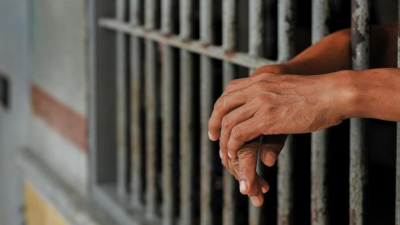
The NCRB Prison Statistics India 2024 report (released recently) shows a national occupancy rate of 112.7% and that 72.6% of inmates are undertrials. Persistent overcrowding, staff shortages and delayed trials are straining prison infrastructure, health services and rehabilitation across many States and Union Territories.
What is the current problem?
Scale and core indicators
India operates 1,333 prisons with sanctioned capacity for 4,53,769 inmates. Actual inmate population is 5,11,542. National occupancy rate: 112.7%. Undertrial prisoners account for 72.6% of all inmates. Capacity rose 24% since 2015, yet more than half of States/UTs exceed sanctioned limits.
Why it matters for governance, rights and public policy
- Rule of law and liberty: Large numbers of unconvicted persons deprived of liberty raise Article 21 concerns and burden courts and prisons.
- Public health and safety: Overcrowding increases disease outbreaks and deprives inmates and staff of adequate healthcare.
- Rehabilitation and recidivism: Suspension of educational and vocational programmes reduces reintegration and raises re-offending risks.
- Administration and security: Staff vacancies and mixed populations (undertrials with convicts) degrade discipline and increase violence risk.
Magnitude, distribution and drivers
Regional disparities
- Highest pressure: Delhi 194.6%, Meghalaya 163.5%.
- Severe strain: Madhya Pradesh 147.1%, Maharashtra 143.9%.
- Manageable levels: Telangana 84.6%, Tamil Nadu 83.2%.
Primary drivers
- Undertrial proportion: 72.6% of inmates are awaiting trial or investigation.
- Judicial delays: Case pendency in subordinate courts and limited fast-track capacity.
- Access to bail and legal aid: Financial incapacity and poor legal assistance prevent release on bail.
- Staff and infrastructure gaps: Vacancies and archaic facilities limit capacity to manage populations humanely.
Structural and administrative bottlenecks
Human resources
Sanctioned prison personnel posts: 99,758. Deployed staff: 63,004. Vacancy rate: over 36%. Shortages affect security, healthcare provision and delivery of rehabilitation programmes. The gap is most acute in high-occupancy jurisdictions.
Living conditions and service delivery
- Separation failure: Overcrowding prevents separation of hardened convicts and first-time undertrials.
- Sanitation and health: Inadequate sanitation, infectious disease outbreaks, limited prison medical officers and mental health professionals.
- Nutrition and rehabilitation: Overstretched kitchens lower meal quality; vocational training and education are often suspended.
Legal and institutional framework
Constitutional allocation
‘Prisons’ and ‘persons detained therein’ are in Entry 4 of the State List. Primary responsibility for management, staffing and infrastructure lies with state governments. The Centre provides guidance, advisory instruments and conditional grants.
Recent legal instruments
- Model Prison Manual, 2016: Minimum living-space norms, women-specific provisions, rehabilitation emphasis.
- Model Prisons and Correctional Services Act, 2023: Shift from punitive to correctional focus; anti-discrimination provisions; states have not confirmed widespread adoption.
- BNSS Section 479 (replacing CrPC 436A): Undertrial detained for half the maximum sentence for the offence must be released on personal bond with/without sureties.
Technological and administrative reforms
| Reform metric / tool | Primary objective |
| Section 479 BNSS | Prevent prolonged pre-trial detention by mandating release on personal bond after service of half maximum sentence term. |
| E-Prisons Project | Digitise inmate records, case histories and flag bail/legal aid eligibility for timely action. |
| FASTER system (SC) | Immediate digital transmission of court bail orders to prisons to avoid release delays. |
Judicial interventions
Key precedents
- Sunil Batra v. Delhi Administration (1980): Held that fundamental rights survive incarceration; prohibited routine use of bar fetters and solitary confinement without judicial oversight.
- Bhim Singh v. Union of India (2014): Directed district-level review mechanisms and deadlines to identify undertrials eligible for release after serving significant detention.
- Suhas Chakma v. Union of India (2024): Advocated expansion of non-custodial alternatives and recommended formal establishment of semi-open and open prisons; reinforced entitlement to legal aid.
Non-custodial correctional alternatives
Open and semi-open prisons
Open prisons operate with minimal security, allow work outside premises and focus on social reintegration. Rajasthan runs one of the largest open-prison networks. Semi-open prisons provide graded freedoms as a rehabilitation step. The Supreme Court has urged states to expand these options to reduce central-cell congestion.
Committees and institutional recommendations
- Mulla Committee (1983): Proposed an all-India Indian Prisons and Correctional Service cadre and separate housing for undertrials.
- Justice Amitava Roy Committee (2018): Recommended fast-track courts for petty offences and universal video-conferencing for produce-in-court to reduce physical transfers and pendency.
- Undertrial Review Committees (UTRCs): District-level panels chaired by District & Sessions Judge, mandated to review cases of undertrials who have completed major detention periods.
- International obligation: India is party to the ICCPR; Article 10 requires humane treatment of persons deprived of liberty.
Policy options and operational reforms (Way forward)
- Judicial-process reforms: Expand fast-track courts for petty and time-bound offences; enforce UTRC schedules; broaden use of video hearings.
- Bail and legal aid: Implement BNSS Section 479 fully; expand state-funded legal aid and legal aid clinics in prisons; adopt non-monetary surety mechanisms.
- Staff professionalisation: Create a specialist prisons cadre or strengthen state-level correctional services; fill vacancies and mandate continuous training.
- Capacity planning: Rationalise capacity by geographic demand, invest in humane infrastructure and enforce minimum living-space norms from the Model Manual.
- Non-custodial expansion: Scale open and semi-open prisons, community service orders and probation to reduce remand numbers.
- Health and rehabilitation: Ensure regular prison medical officers, mental-health services, nutrition audits and restore vocational and educational programmes.
- Technology: Expand E-Prisons coverage, integrate case-tracking with courts, and operationalise FASTER transmissions across jurisdictions.
Model Questions
- Examine the multi-dimensional crisis of prison overcrowding in India, particularly the challenges created by the high proportion of undertrial prisoners and their socio-economic and human rights implications. [GS-II: Governance]
- Despite ‘Prisons’ being a State List subject, critically analyse structural and administrative bottlenecks hindering effective prison management and assess recent legislative and technological responses. [GS-II: Constitution of India & Polity]
- Discuss the role of the Indian judiciary in protecting prisoner rights; evaluate the potential of non-custodial correctional alternatives, such as open prisons, in decongesting carceral spaces and promoting rehabilitation. [GS-II: Social Justice]
- Recommend a comprehensive reform package to shift India’s penal system from a punitive model to a correctional and rehabilitative one while ensuring speedy justice and human dignity. [GS-II: Governance]
Answer should quantify the problem using NCRB data (112.7% occupancy; 72.6% undertrials; capacity v. population). Analyse causes: judicial delays, bail access, legal aid gaps, staff shortages. Discuss impacts on health, sanitation, rehabilitation, Article 21 rights, and social costs including families’ economic burden. Suggest targeted measures: bail reform, legal aid expansion, UTRCs, fast-track courts and non-custodial options.
Answer should explain constitutional allocation and state responsibility. Identify bottlenecks: 36% staff vacancy, infrastructure shortfall, failure to separate prisoners. Evaluate Model Prisons Act 2023 adoption status, BNSS Section 479, E-Prisons and FASTER systems—their potential and implementation gaps. Recommend central support measures, conditional funding for reforms and mandatory state action plans for adoption and capacity building.
Answer should cite Sunil Batra, Bhim Singh and Suhas Chakma judgments and Article 21 jurisprudence. Explain judicial directions on separation, review committees and non-custodial options. Assess operational benefits and limits of open/semi-open prisons (examples: Rajasthan), community service and probation; address requirements: selection criteria, post-release support and monitoring to ensure rehabilitation and public safety.
Answer should propose integrated measures: enforce BNSS Section 479 and expand legal aid; create/strengthen prisons cadre and fill vacancies; adopt Model Prisons Act; scale open/semi-open prisons and non-custodial sentences; expand fast-track courts and video hearings; invest in health, nutrition and vocational training; and use E-Prisons/FASTER for case-management and release processes.