
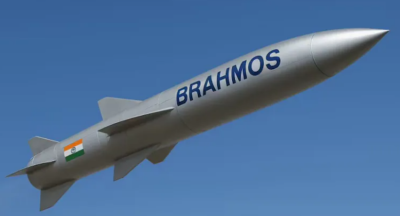
India has officially confirmed the signing of an agreement to export BrahMos supersonic cruise missiles to Vietnam, marking a critical expansion of its defence footprint in Southeast Asia. This development, announced during the 2026 Shangri-La Dialogue in Singapore, follows the Philippines’ procurement in 2022 and precedes an anticipated deal with Indonesia, which is currently in the final stages of negotiation. These partnerships reflect India’s growing capacity to provide advanced, reliable defence technology to trusted foreign partners while strengthening regional security architecture across the Indo-Pacific.
Genesis of BrahMos Aerospace
The BrahMos missile system is the product of an inter-governmental agreement signed in 1998 between India and Russia. The project is managed by BrahMos Aerospace Private Limited, a joint venture designed to design, develop, and market high-precision strike weapons.
- Corporate Structure: The entity is a joint venture between India’s Defence Research and Development Organisation (DRDO) and Russia’s NPO Mashinostroyeniya. India holds a majority stake of 50.5%, while Russia holds 49.5%.
- Naming Origin: The name is a portmanteau derived from two rivers: the Brahmaputra of India and the Moskva of Russia.
- Strategic Objective: The initiative was formed to create a world-class, high-speed missile system to meet the defensive requirements of the Indian Armed Forces and eventually serve the international market.
Technical Specifications and Capabilities
BrahMos is categorized as a two-stage, supersonic cruise missile. Its propulsion system utilizes a solid propellant booster for the initial launch phase, followed by a liquid ramjet engine for the cruise phase.
- Speed: It achieves supersonic speeds of Mach 2.8 to Mach 3.0, making it one of the fastest cruise missiles currently operational worldwide.
- Range: While the original version had a range of 290 km, advancements have extended this to a 450–800 km envelope.
- Launch Platforms: The system is highly versatile, with variants developed for land, sea, air, and underwater platforms.
- Precision: It features an advanced guidance system combining Inertial Navigation with GPS/GLONASS, resulting in a low Circular Error Probable (CEP) of under 1 meter.
- Stealth and Flight Path: The missile utilizes sea-skimming capabilities and stealth features to maintain a low radar cross-section, complicating detection by enemy sensor systems.
Strategic Export Significance
The export of BrahMos is a centerpiece of India’s push toward becoming a major global defence supplier, moving beyond domestic consumption toward international partnership-based exports.
- ASEAN Focus: The growing interest from countries like the Philippines, Vietnam, and Indonesia signals deep trust in Indian-made military hardware. These agreements strengthen collective security in the Indo-Pacific.
- Make in India: Export contracts provide economies of scale for domestic manufacturing facilities, such as the production unit in Lucknow, which integrates missiles for both Indian and international clients.
- Geopolitical Alignment: Sharing advanced defence technology is reserved for friendly foreign nations, helping India build “inclusive and reliable partnerships” that reduce strategic vulnerabilities for its regional allies.
- Economic Impact: The cumulative value of these export deals significantly advances India’s stated target for defence exports, which is set to reach ₹50,000 crore by 2030.
IASPOINT Booster Facts for UPSC
- Operational History: The BrahMos missile was first test-fired in June 2001. It is now inducted across all three wings of the Indian Armed Forces (Army, Navy, and Air Force).
- First Export Customer: The Philippines was the first international buyer to sign a contract for the BrahMos system in 2022, valued at approximately $375 million.
- BrahMos-NG: The Next Generation (NG) variant is currently under development. It is smaller and lighter, specifically engineered for integration into a wider array of platforms, including fighter aircraft and submarine torpedo tubes.
- Hypersonic Ambitions: BrahMos-II is a hypersonic missile under development, expected to reach speeds exceeding Mach 7, which would place it in a higher performance category than current supersonic cruise missiles.
- MTCR Membership: India’s membership in the Missile Technology Control Regime (MTCR) has been a vital catalyst for the development and export of these long-range, high-precision missile systems.