
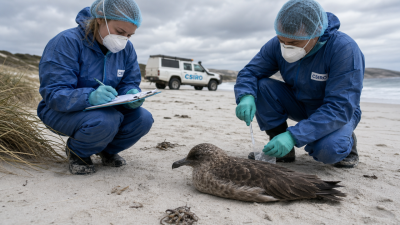
On 20 June 2026 Australia confirmed its first mainland case of H5 highly pathogenic avian influenza after detection in a brown skua at Cape Le Grand National Park near Esperance, Western Australia.
Detection Details
- Index case: Brown skua found sick on 14 June; preliminary tests by Western Australia on 18 June; confirmatory testing by CSIRO Australian Centre for Disease Preparedness (ACDP) on 20 June.
- Secondary case: Giant petrel from same locality returned preliminary H5 positive and awaited CSIRO ACDP confirmation (as of 20 June).
Epidemiology & Spread
- Agent: H5 high pathogenicity avian influenza (HPAI) strain.
- Continental status: Mainland detection completes H5 presence on every continent.
- Migratory linkage: Cases involve sub‑Antarctic migratory seabirds that move between sub‑Antarctic islands and southern Australian coasts.
Wildlife & Agriculture Impact
- Heard Island 2025: H5 detected in Oct 2025; associated with deaths of over 13,000 southern elephant seal pups.
- As of 20 June 2026: No confirmed infection in Australian commercial poultry or evidence of mass mortalities on the mainland.
Surveillance & Response
- Confirmatory lab: CSIRO ACDP is Australia’s national high‑containment veterinary diagnostic facility.
- Preparedness: Australian Government taskforce for possible incursion established in 2024.
- Reporting: Emergency Animal Disease Hotline 1800 675 888.
IASPOINT Booster Facts
- HPAI classification: Determined by intravenous pathogenicity index (IVPI) in chickens and presence of polybasic cleavage site in haemagglutinin (HA).
- International reporting: Avian influenza outbreaks are notifiable to the World Organisation for Animal Health (WOAH).
- Data sharing: Sequence data for H5 strains are routinely deposited in global databases for surveillance and phylogenetics.