
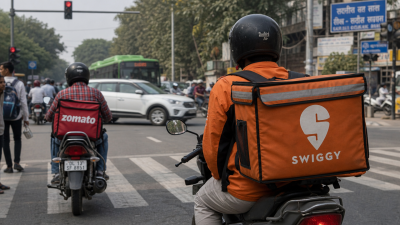
Recently the ILO adopted Convention No. 193 on Decent Work in the Platform Economy, a first global treaty setting binding labour standards for platform workers. Parallel national and sub‑national measures and new regulatory proposals reflect competing models for worker classification, social protection and algorithmic governance.
What is the issue?
Nature and scale
The gig economy comprises short‑term, task‑based and platform-mediated work. Globally it was valued at USD 556.7 billion in 2024 and may reach USD 2.1 trillion by 2033. In India the Economic Survey notes jobs growth in platform work while flagging protection gaps.
Core problems for workers
- Pay insecurity: Unstable earnings and lack of minimum wage guarantees.
- Social security gap: No guaranteed access to provident fund, paid leave, health cover.
- Algorithmic management: Opaque task allocation, performance scoring and automated deactivations.
- Classification ambiguity: Tension between employee and independent contractor status.
- Enforcement deficit: Weak grievance redressal and limited platform accountability.
Why it matters for governance and economy
Gig work affects employment quality, urban service delivery, fiscal liabilities and labour market statistics. Poor protections raise poverty and health risks. Algorithmic systems raise questions of due process and regulatory reach. International norms and sub‑national laws shape trade and investment norms for platform firms.
Global and national regulatory responses
| Model | Key features | Implications |
|---|---|---|
| ILO Convention No. 193 | Binding standards on pay, safety, social security, correct classification and algorithmic management | International benchmark; enables national law reform; voting 406–8 with 36 abstentions |
| U.S. Department of Labor (proposed rule) | Emphasises worker control and opportunity for profit/loss; leans toward contractor classification | May reduce employee status claims; affects enforcement of labour protections |
| U.S. state portable benefits laws | Portable accounts for independent contractors to receive benefits across platforms | Addresses portability; depends on contribution design and administration |
| New York City measures | Guaranteed minimum hourly rate, pay transparency, tipping rules, protection from unfair deactivation | Direct worker protections and enforcement; led to settlements for minimum pay violations |
Evidence on harms
A Human Rights Watch report documented exploitative conditions: unpredictable hours, unstable pay, absence of basic protections and worsening effects of algorithmic management. Enforcement actions in NYC produced a multi‑million USD settlement for delivery firms over minimum pay breaches.
Technology and future risks
- Algorithmic opacity: Automated decisions affect earnings and deactivations without human recourse.
- AI and “gigification”: AI adoption could shift more roles to taskised, non‑full‑time formats, expanding insecure work.
Legal and constitutional dimensions for India
- Relevant provisions: Articles 14, 19, 21 and Directive Principles (Articles 39, 41, 42, 43) provide a constitutional basis for livelihood protection, just conditions of work and social security.
- Existing labour law fit: Central labour codes do not clearly define gig/platform workers. Enforcement mechanisms were designed for standard employer–employee relations.
- International obligations: Ratification of ILO norms would require domestic alignment on classification, social security and algorithmic governance.
Policy options for India
- Statutory definitions: Enact clear legal categories for ‘platform worker’ and ‘gig worker’ with criteria for control, dependency and economic reality.
- Social security architecture: Create platform‑agnostic, portable social security accounts with mandatory contributions from platforms, workers and a fiscal top‑up for vulnerable workers.
- Minimum pay and transparency: Require guaranteed minimum earnings per hour or per task and standardised pay‑disclosure norms.
- Algorithmic governance: Mandate transparency of scoring and allocation systems, human review for adverse decisions, impact audits and data access rights for regulators and workers.
- Grievance and enforcement: Establish fast‑track dispute resolution with sectoral labour inspectors and empowered municipal agencies for urban platform work.
- Collective representation: Allow platform workers to form associations and pursue collective bargaining; protect organising rights irrespective of classification.
- Portable benefits pilot: Test portable accounts and pooled contributions in key sectors (delivery, ride‑hailing) before scale‑up.
- Skills and transition support: Offer targeted reskilling, certification and income support to reduce worker vulnerability amid AI transitions.
- Data and monitoring: Build a national registry of platform workers, standard metrics for incomes and hours, and an algorithmic impact reporting regime.
- Adopt ILO principles selectively: Consider ratifying core elements of Convention No. 193 and adapt treaty norms to India’s federated framework and informal sector realities.
Implementation and institutional design
- Coordination: A central nodal body should coordinate with states, cities and labour enforcement agencies.
- Funding: Combine platform levies, worker contributions and central/state budgetary support for transitional costs.
- Regulatory toolkit: Use sectoral codes, licensing conditions for platforms, procurement rules and consumer protection law to enforce norms.
- Evaluation: Mandate periodic reviews and impact assessments to adjust rules as AI and platform practices evolve.
Practical risks and trade‑offs
- Over‑classification risk: Automatic employee status may reduce flexibility and reduce demand for gig work.
- Compliance burden: Small platforms may face higher costs; regulatory design must be scalable.
- Enforcement capacity: State labour departments need capacity building to monitor digital platforms and algorithms.
Key takeaways for policy makers
- Adopt clear legal categories: Remove ambiguity in classification to enable targeted protections.
- Combine rights and portability: Ensure basic protections while preserving worker mobility through portable benefits.
- Regulate algorithms: Require transparency, human oversight and auditability of automated systems affecting livelihoods.
- Phase implementation: Use pilots, sectoral rules and state‑city experiments before nationwide mandates.
Model Questions
1. Examine the evolving global regulatory landscape for gig economy workers, evaluating the importance of ILO Convention No. 193 and its likely implications for labour protection in India. [GS-II: International Relations]
ILO Convention No. 193 sets binding standards on pay, safety, social security, classification and algorithmic management. For India it offers a template for statutory definitions, social protection extension and algorithmic oversight. Ratification would require legal alignment of labour codes, portable benefits and enforcement capacity building at central, state and city levels, while balancing flexibility and fiscal costs.
2. Discuss how rapid gig‑economy growth creates both employment opportunities and challenges in India, with special reference to algorithmic management and possible AI‑driven “gigification”. [GS-III: Economic Development]
Gig work expands income opportunities and urban services. Challenges include unstable pay, lack of social security, erratic hours and opaque algorithmic controls. AI may increase taskisation and non‑standard jobs, raising systemic insecurity. Policy must combine earnings floors, portable benefits, algorithmic transparency and skills programmes to preserve access while reducing precarity.
3. Compare regulatory approaches in the United States (DOL rule, state portable benefits) and New York City, and assess lessons for a comprehensive gig‑worker framework in India. [GS-II: Governance]
The U.S. DOL proposal emphasises worker control and profit/loss criteria favouring contractor status. State portable benefits secure benefits portability. NYC imposes minimum rates, pay transparency and deactivation protections with enforcement. India can combine clear classification, portable social accounts, minimum earnings and algorithmic safeguards, using federal‑state coordination and pilot testing to tailor solutions.
4. Identify constitutional and policy measures India can adopt to ensure decent work and social security for gig workers, considering existing labour law gaps. [GS-II: Constitution of India & Polity]
Constitutional provisions on equality, livelihood and Directive Principles provide a basis for protection. Policy measures include statutory definitions of platform work, portable social security schemes, minimum pay rules, algorithmic transparency mandates, fast grievance redressal and rights to organise. Legal reform should align central codes with state enforcement and international standards such as ILO Convention No. 193.
Last Modified: June 23, 2026