
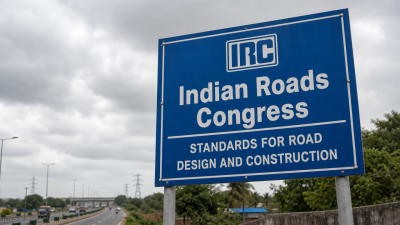
On 23 June 2026 the Indian Roads Congress (IRC) issued takedown notices against platforms publishing its road standards, invoking copyright. The action has renewed debate on whether standards that carry legal force should be freely accessible and whether all government edicts should be centrally published under the Jan Vishwas framework.
What is the issue?
IRC, a government arm, has asserted copyright over its road standards and sought takedowns of online copies. Critics argue citizens and firms cannot comply with standards they cannot access. A Jan Vishwas proposal recommends central publication of all government edicts and treating inaccessible edicts as null and void. The BIS precedent — free online access after litigation — is cited as a contrasting model.
Why it matters
- Governance: Public access to legally binding technical standards affects administrative transparency and enforceability of regulations.
- Economy: Access reduces compliance costs and regulatory uncertainty for businesses, notably MSMEs and ‘Make in India’ manufacturers.
- Public safety: Road and construction standards directly affect lives and infrastructure quality; restricted access can increase risk and litigation.
Legal and constitutional dimensions
Right to Information: IRC is subject to RTI; information that determines citizens’ duties and rights is ordinarily disclosable. No one should own the law: When standards are incorporated into regulation or adjudicated as mandatory, they function as law and should be in the public domain. Copyright vs public domain: Copyright claims on standards incorporated into law raise conflicts with principles of legal access. International precedents in the US and EU hold that mandatory legal materials must remain publicly accessible.
Governance and policy frameworks
Jan Vishwas framework: Proposes central publication of edicts, with inaccessible rules deemed void. This aims to improve clarity on what is legally binding and reduce arbitrary enforcement. India Code and central platforms: Business groups urge using India Code or a similar platform to host standards and edicts centrally, ensuring uniform access and regulatory certainty. Administrative practice: Clear rules are needed to identify which standards are mandatory, which are advisory, and how incorporation by reference is notified.
Economic implications
- Compliance costs: Charging for mandatory standards raises costs for firms, particularly MSMEs, and increases barriers to market entry.
- Innovation and competitiveness: Open access lowers information friction, aiding product development and adherence to quality benchmarks important for export competitiveness.
- Policy missions: ‘Make in India’ and quality-led manufacturing benefit from easily available standards that allow firms to meet specifications without legal uncertainty.
- Revenue trade-off: Standard-setting bodies cite sale revenues; BIS experience shows free access increased awareness and sales in complementary channels, suggesting revenue loss is not inevitable.
Social and public safety aspects
Road and construction standards affect accident rates, structural safety and maintenance regimes. Public access allows engineers, contractors, local governments and citizens to verify compliance. Inaccessible standards hinder public scrutiny and citizen redress, and may increase reliance on costly litigation to discover binding norms.
Institutional roles and challenges
| Stakeholder | Position / Challenge |
|---|---|
| Indian Roads Congress (IRC) | Publishes road standards; asserts copyright and seeks control over distribution; cites intellectual-property and revenue concerns. |
| Bureau of Indian Standards (BIS) | After litigation, made standards freely available online; shows model for balancing access with institutional stability. |
| Government & enforcement agencies | Require clarity on which standards are adopted into law to enforce compliance fairly. |
| Businesses / MSMEs | Seek low-cost access to standards to reduce compliance burden and support innovation. |
| Civil society / citizens | Require access to understand rights and obligations; public safety dependents on open standards. |
Comparative practice and precedents
International jurisprudence in the US and EU treats mandatory legal materials and certain safety standards as public domain when they are binding. The BIS case in India shows litigation can force open access. These precedents support a rule that standards incorporated into law must be freely accessible.
Way forward
- Mandate central publication: Require all central and state edicts, regulations, circulars and incorporated standards to be published on India Code or an equivalent central portal.
- Legal clarification: Amend rules to state that standards incorporated into law or made mandatory are in the public domain and not subject to copyright claims.
- Deeming rule: Implement Jan Vishwas proposal selectively: treat non-published mandatory edicts as unenforceable until published, with transitional safeguards for public safety.
- Revenue and transition: Offer alternative funding models for standard-setting bodies — government grants, subscription for value-added services, consultancy — to replace sales revenue without blocking access.
- Technical and access design: Strengthen India Code: searchable, machine-readable, version-controlled, with clear metadata on legal status and date of adoption.
- Implementation governance: Create an inter-ministerial committee to classify standards (mandatory/advisory), set publication timelines and oversee compliance.
- Capacity building: Support MSMEs and local bodies with training and outreach to use open standards for design, procurement and quality control.
Model Questions
1. Critically analyse the conflict between the Indian Roads Congress’s assertion of copyright over its standards and the principle of public access to government edicts. Discuss implications for transparency and the Right to Information. [GS-II: Governance]
Copyright claims by a government arm on standards incorporated into law conflict with RTI and the principle that citizens must access rules that impose duties. Restricted access undermines transparency, accountability and fair enforcement. Courts and international practice favour public domain status for mandatory standards. Policy response should clarify that standards adopted by regulation are public, and require central publication to ensure enforceability and citizen compliance.
2. Examine how inaccessible government standards can impede economic growth, public safety, and the ‘Make in India’ initiative. [GS-III: Economic Development]
Inaccessible standards raise compliance costs, create regulatory uncertainty and impede MSME entry and innovation. Firms incur expenditure to obtain documents or face enforcement risk. For ‘Make in India’, lack of open standards reduces product quality assurance and export readiness. Public-safety standards hidden from practitioners increase accident and failure risk. Open access lowers transaction costs and supports competitiveness and safety.
3. Evaluate the Jan Vishwas proposal to centrally publish government edicts and deem inaccessible edicts null and void. Can central platforms like India Code foster regulatory certainty? [GS-II: Governance]
Central publication improves discoverability and legal clarity, reducing asymmetric information between regulators and regulated parties. Deeming inaccessible edicts void creates a strong incentive for disclosure but requires safeguards for continuity in safety-critical domains. Strengthening India Code with metadata and legal status markers can provide regulatory certainty. Implementation needs classification rules, transitional provisions and resources for timely publication.
4. Drawing lessons from the Bureau of Indian Standards experience, discuss challenges and benefits of moving standard-setting bodies towards open-access models for safety and construction standards. [GS-II: Governance]
BIS experience shows free access raises awareness and may not destroy revenue; complementary channels can sustain institutions. Benefits: improved compliance, reduced litigation, better public safety and support for industry. Challenges: funding shortfalls, intellectual-property expectations, and internal capacity to publish and update content. Solutions include government funding, paid value-added services, phased rollout and clear rules on which standards are mandatory.
Last Modified: June 24, 2026