
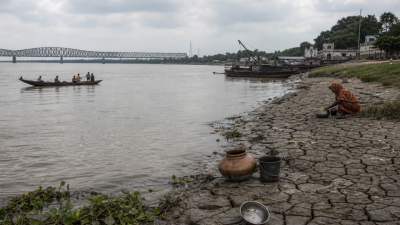
The 1996 Ganges Water Treaty between India and Bangladesh will expire in December 2026. Negotiations are underway against a background of reduced dry-season flows, altered hydrology from climate change, and rising demand for predictable, legally binding water allocations.
What is the current issue?
Recent negotiations focus on renewing or replacing the treaty to reflect changed river conditions and climate risks. Bangladesh seeks legally binding minimum dry‑season flows (proposal: 40,000 cusecs). India insists on updated hydrological data and prefers measurement at the Farakka point. Technical teams have begun joint inspections and data exchanges under the Joint Rivers Commission.
Why it matters
- Governance: Treaty terms establish bilateral water diplomacy, legal predictability and dispute-management mechanisms.
- Environment: Reduced flows and altered sediment regimes threaten delta ecology and biodiversity, notably the Sundarbans.
- Economy & Livelihoods: Agriculture, fisheries (Hilsa), and coastal communities face salinity intrusion and income loss.
- Security & Stability: Water stress can provoke local tensions and cross-border political friction.
Background of the 1996 Treaty
- Scope: Water sharing at Farakka during lean season; operational protocols agreed bi‑laterally.
- Institution: Joint Rivers Commission (JRC) is the designated technical forum for implementation and data exchange.
- Current status: Treaty expiry in December 2026 has driven fresh technical work and joint inspections at Farakka.
Climate and hydrological pressures
- Drivers: Himalayan glacier change, monsoon variability and upstream diversions have altered seasonal flows.
- Outcomes: Reduced dry‑season discharge, greater salinity intrusion downstream, and shifting flood timing and magnitude.
- Evidence: Recent research shows several major rivers in the delta approach or exceed a defined ‘safe operating space’ for ecological functioning.
Ecological stress and sectoral impacts
Delta and Sundarbans
- Sundarbans: Mangrove health depends on sustained freshwater inflows to resist salinisation and sea‑level rise; reduced flows increase biodiversity loss and coastal vulnerability.
Fisheries and sediment
- Hilsa decline: Altered flow regimes and blocked fish migration reduce spawning success downstream.
- Sediment deficit: Barrage operations alter sediment transport, affecting delta accretion and increasing erosion risk.
Role of Farakka Barrage
- Operational effects: Changes river hydraulics at the Farakka point, disrupts fish passage and traps sediment.
- Flood linkage: Flow regulation can change flood timing and intensity upstream in Bihar and downstream in Bangladesh depending on release patterns.
Positions and core disagreements
| Issue | Bangladesh | India |
|---|---|---|
| Guaranteed minimum dry‑season flow | Seek legally binding guarantees; propose 40,000 cusecs | Open to revision but wants arrangements based on updated hydrology |
| Measurement basis | Basin‑wide sharing; entire river basin as reference | Prefer measurement and operational framework centred on Farakka point |
| Negotiation forum | Support basin approach; call for wider regional cooperation by some civil society groups | Handle within bilateral frameworks like the JRC |
Technical, institutional and legal dimensions
- Joint Rivers Commission: Existing bilateral mechanism for technical studies, data exchange and inspections; central to immediate negotiations.
- Technical measures: Joint monitoring, shared hydrological databases, independent scientific panels, and adaptive operational protocols for barrages.
- Legal options: Incorporate binding minimum flow clauses, adaptive triggers tied to observed hydrology, and agreed dispute‑resolution procedures.
Safe Operating Space (SOS) and data needs
- SOS concept: Defines ecological thresholds for rivers. Studies show multiple rivers in the delta exceed SOS limits, signalling ecological stress.
- Data priorities: Continuous flow and sediment monitoring, basin‑wide modelling, standardised measurement protocols, transparent data sharing and joint verification.
Regional governance and civil society inputs
- Regional argument: Some civil society groups advocate a multilateral basin forum including Nepal, Bhutan and China to address upstream influences and glacier changes.
- Climate justice framing: Calls exist to treat transboundary flows as an equity issue for vulnerable populations in the delta.
Risks to bilateral relations and adaptation needs
- Political risks: Perceived shortfalls in flows can produce acute diplomatic tensions if not managed through technical diplomacy.
- Social risks: Livelihood losses in fisheries and farming can drive displacement and cross‑border grievances.
- Adaptive requirements: Treaty design must allow periodic review, scientific updates and contingency provisions for extreme hydrological events.
Policy options and pragmatic steps forward
- Science‑based allocations: Use updated basin modelling and SOS thresholds to set minimum flows and seasonal allocations.
- Legally binding guarantees: Embed predictable minimum dry‑season flows with adaptive clauses tied to observed hydrology.
- Barrage operation reform: Jointly design release rules that balance sediment transfer, fish migration and flood management.
- Strengthen JRC: Empower with independent scientific secretariat, real‑time data platforms and dispute‑resolution mandate.
- Regional engagement: Initiate a technical forum with co‑riparians for glacier runoff and tributary management while keeping bilateral treaty negotiations active.
- Community resilience: Fund mangrove restoration, salinity‑resistant agriculture, fishery co‑management and livelihood diversification in delta communities.
Model Questions
1. Analyse the challenges posed by climate change and evolving hydrological realities to the renewal of the 1996 Ganga Waters Treaty. Discuss the implications of these challenges for India‑Bangladesh bilateral relations. [GS-II: International Relations]
Both states face reduced dry‑season flows from glacier change, monsoon variability and upstream diversions. Key negotiation friction points are measurement basis (Farakka vs basin) and Bangladesh’s demand for legally binding minimum flows. Implications include increased technical diplomacy, potential bilateral friction if expectations diverge, risks to livelihoods and local stability, and the need to embed adaptive, science‑based mechanisms in any renewed treaty via the JRC and joint monitoring.
2. Examine the ecological stress in the Ganges‑Brahmaputra‑Meghna basin, particularly the Sundarbans, and link these stresses to transboundary management and infrastructure such as the Farakka Barrage. Suggest measures to achieve ecological resilience. [GS-III: Environment & DM]
Reduced dry flows increase salinity and degrade mangroves in the Sundarbans. Farakka alters sediment transport and impedes fish migration, affecting Hilsa and delta accretion. Measures: legally guaranteed basin‑wide minimum flows, adaptive barrage release rules for sediment and fish passage, joint sediment management, mangrove restoration, SOS thresholds for rivers, community livelihoods support and coordinated disaster risk financing.
3. “The issue of Ganga water sharing transcends bilateral agreements and demands a broader regional governance framework.” Critically evaluate. [GS-II: Governance]
Basin hydrology involves upstream actors (tributaries and glaciers in Nepal, Bhutan and China). Bilateral treaties address shared points but may not capture upstream drivers or regional climate impacts. A regional governance layer would improve data on glacier runoff, tributary flows and seasonal forecasts. Practical steps include a technical basin forum for data sharing, complementary to a bilateral treaty handled through the JRC, preserving diplomatic flexibility while expanding scientific collaboration.
4. Discuss the significance of scientific data and the ‘safe operating space’ concept in ensuring sustainable transboundary river management. What institutional mechanisms exist for India and Bangladesh to facilitate such data‑driven negotiations? [GS-III: Environment & DM]
The SOS concept sets ecological thresholds; recent studies show multiple delta rivers exceed limits, justifying data‑driven allocations. Critical needs: continuous flow, sediment and salinity monitoring, joint basin modelling and agreed measurement protocols. Institutional mechanisms: Joint Rivers Commission, bilateral technical committees, joint inspections and potential independent scientific secretariat. These bodies can provide verified data, scenario modelling and mechanisms to embed adaptive thresholds into treaty text.
Last Modified: June 24, 2026