
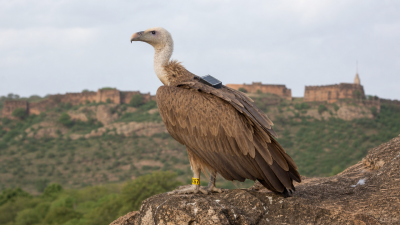
A five‑year‑old captive‑bred Long‑billed Vulture (Gyps indicus) named X67 arrived at Ranthambore Tiger Reserve on 23 June 2026 after being released from Melghat Tiger Reserve (Somthana range, Akot Wildlife Division) on 2 January 2026. Fitted with a solar‑powered tracking tag, X67 covered 3,334 km over about 27 days after beginning long‑range movement on 28 May 2026, stopping at Satpura Tiger Reserve and Kuno National Park.
Key movement data
- Release location and date: Somthana range, Melghat Tiger Reserve; released 2 January 2026.
- Departure for long‑range movement: 28 May 2026 after ~4 months’ acclimatisation.
- Distance and duration: 3,334 km covered in ~27 days; arrival at Ranthambore on 23 June 2026.
- Route highlights: Maharashtra → Madhya Pradesh (Satpura TR, Kuno NP) → Rajasthan (Ranthambore TR).
Conservation programme details
- Implementing agencies: Bombay Natural History Society (BNHS) with Maharashtra Forest Department.
- Release cohort: 15 captive‑bred vultures fitted with solar‑powered tracking tags.
- Foraging outcome: X67 survived without supplementary feeding and foraged independently.
Ecological and management facts
- Species: Long‑billed Vulture, Gyps indicus (IUCN: Critically Endangered).
- Habitat preference: Frequent use of tiger reserves and protected areas due to availability of wild carrion from large carnivores.
- Kuno NP: Designated cheetah reintroduction site in central India.
- Tracking technology: Solar‑powered tags provide GPS location fixes and transmission for movement monitoring.
IASPOINT Booster Facts
- Captive‑breeding networks: BNHS operates vulture breeding and release programmes in India.
- Legal protection: Gyps species receive strict protection under India’s wildlife laws (Schedule I species category practices apply).
- Landscape linkage: Movements show connectivity across Maharashtra–Madhya Pradesh–Rajasthan protected area network.
- Monitoring metric: Distance, stopover sites and independent foraging are key indicators of post‑release success.