
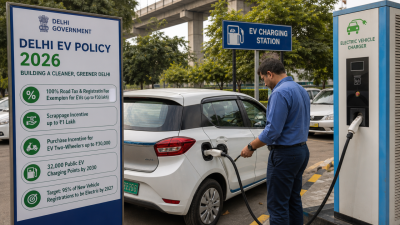
Delhi Cabinet approved the Delhi Electric Vehicle (EV) Policy 2026 on 29 June 2026; it is to be implemented from 1 July 2026 until 31 March 2030, pending Lieutenant Governor approval.
Key Fiscal Incentives
- Road tax & registration exemption: 100% exemption for pure electric cars with ex-showroom price up to ₹30 lakh.
- Scrappage incentives: Replace BS‑IV or older vehicles with EVs — ₹10,000 (two‑wheelers), ₹25,000 (three‑wheelers), ₹50,000 (N1 trucks), ₹1,00,000 (four‑wheelers).
- Purchase subsidies: Two‑wheelers: ₹30,000 (Year 1), ₹20,000 (Year 2), ₹10,000 (Year 3); Three‑wheelers: ₹50,000 (Y1), ₹40,000 (Y2), ₹30,000 (Y3); N1 trucks: ₹1,00,000 (Y1).
- Budgetary allocation: Approx. ₹15,000 crore proposed for electric mobility ecosystem over four years.
Targets, Mandates & Infrastructure
- Charging network: Target to install 32,000 public EV charging points across Delhi within four years.
- Registration mandates: Only electric three‑wheelers to be registered from 1 Jan 2027; only electric two‑wheelers from 1 Apr 2028.
- New registration target: Aim for 95% of all new vehicle registrations in Delhi to be electric by 2027.
- Phasing priority: Emphasis on electrification of commercial vehicles, two‑wheelers and institutional fleets.
IASPOINT Booster Facts
- N1 vehicle class: N1 denotes light goods vehicles (goods vehicles up to 3.5 tonnes) under Central Motor Vehicles rules.
- Territorial scope: State (NCT of Delhi) policy; implementation requires Lieutenant Governor concurrence for NCT matters.
- Central scheme linkage: State incentives are intended to operate alongside central programmes such as FAME‑II.
- Eligibility condition: Scrappage benefits apply only when an internal combustion BS‑IV or older vehicle is replaced by a zero‑emission EV.