
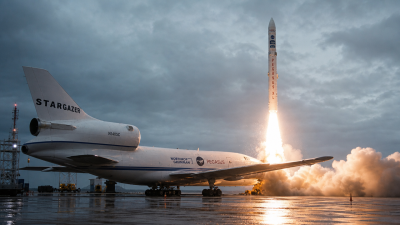
The launch of NASA’s USD 30 million robotic rescue mission for the Neil Gehrels Swift Observatory was postponed from 30 June 2026; the new tentative launch time is 2 July 2026 at 0909 GMT (5:09 a.m. EDT).
Mission and objective
- Objective: Grapple the uncrewed Swift telescope and tow it to a higher stable orbit to prevent destructive re‑entry.
- Target orbit change: Raise from ~360 km (224 miles) to ~600 km (373 miles).
- Cost: USD 30 million.
Spacecraft and launch
- Rescue vehicle: LINK, built by Katalyst Space Technologies (US startup).
- Launch stack: Pegasus XL three‑stage solid rocket carried by a modified Northrop Grumman Stargazer L‑1011 aircraft.
- Launch site: Kwajalein Atoll, Marshall Islands; mission is the final flight of the Pegasus rocket.
Operational profile
- Rendezvous: LINK will locate, manoeuvre around and latch on using three robotic arms.
- Timeline: Capture and initial operations ~1 month; orbit‑raising via gentle thrust over several months.
- Propulsion status: Swift currently has no usable propulsion and is losing altitude.
Context and technical drivers
- Swift history: Launched 2004 for gamma‑ray burst studies from low Earth orbit (~600 km originally).
- Decay cause: Increased atmospheric drag since late 2024/early 2025 linked to intense solar activity.
- NASA action: Drag‑minimisation profile enacted 11 Feb 2026, extending point‑of‑no‑return to late Oct 2026.
- Precedent: If successful, first commercial capture of a US government satellite not designed for servicing; relevant to future servicing of assets such as Hubble.
IASPOINT Booster Facts
- Pegasus XL: Air‑launched from L‑1011; uses three solid propellant stages.
- Kwajalein Atoll: US‑controlled launch range in the Marshall Islands used for orbital launches and tests.