
Daily Activities

UPSC Prelims Current Affairs

UPSC Mains Current Affairs

Current Affairs

Defence Land Solar Power Project

Defence Land Solar Power Project

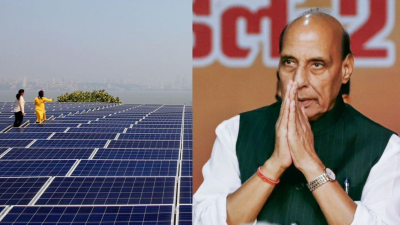
The Raksha Mantri has approved the establishment of a 250 MW solar power project integrated with a Battery Energy Storage System (BESS) on approximately 850 acres of vacant defence land in Sitapur, Uttar Pradesh. This represents the first large-scale renewable energy initiative undertaken on land owned by the Ministry of Defence (MoD). To be implemented by NTPC Renewable Energy Limited—a wholly-owned subsidiary of NTPC Green Energy Limited—the project aims to enhance energy security for military establishments, reduce dependence on conventional grid power, and generate long-term fiscal savings for the exchequer. The initiative creates a structural model for the optimal utilization of idle state-owned assets while driving national green energy and environmental sustainability goals.

Project Overview and Technical Specifications

The project combines solar photovoltaic generation with advanced storage capabilities to ensure a reliable and steady supply of power.

Location and Land Allocation

The facility will be situated on nearly 850 acres of vacant land within the former Sitapur Cantonment area in Uttar Pradesh. By converting underutilized defence real estate into productive energy infrastructure, the project fulfills a dual purpose of strategic asset management and green field expansion.

Capacity and Grid Balancing via BESS
  • Generation Capacity: The plant is rated at 250 MW of solar power.
  • Storage Integration: The inclusion of a Battery Energy Storage System (BESS) is designed to mitigate the intermittency inherent to solar energy. It stores excess electricity generated during peak sunlight hours and discharges it during peak demand hours or when solar irradiance is low, such as at night or during overcast weather.

Institutional Structure and Implementation Framework

The execution of the project depends on a multi-agency collaborative framework to handle legal, land, and energy-distribution aspects.

Executing Agency

NTPC Renewable Energy Limited will develop the project through a competitive bidding process. This mechanism is designed to secure optimal energy pricing, maximizing financial savings for the consumer establishments.

Inter-Agency Coordination

The project requires close coordination between several distinct bodies:

  • Ministry of Defence (MoD): Provides policy clearance and administrative oversight.
  • Integrated Headquarters of MoD (Army): Aligns the energy infrastructure with the operational needs of the military installations.
  • Directorate General Defence Estates (DGDE): Manages the land lease, demarcation, and management protocols for the 850-acre cantonment tract.

Strategic and Economic Benefits

The venture introduces multiple benefits that extend beyond simple power generation.

Energy Security and Self-Reliance

By establishing a dedicated solar-plus-storage plant, regional defence installations reduce their dependence on the public commercial grid. This provides an insulated power supply that is critical for maintaining uninterrupted administrative and operational functions.

Fiscal Efficiency

The electricity generated will be routed directly to various defence establishments across Uttar Pradesh. Procuring power from a captive, co-located renewable installation is projected to lower electricity bills, saving substantial funds for the defence budget over the 25-year operational life of the project.

Key Features of the Sitapur Solar Project

ParameterSpecifications / Features
LocationFormer Cantonment Area, Sitapur, Uttar Pradesh
Total Land AreaApproximately 850 Acres
Installed Capacity250 Megawatt (MW)
Primary TechnologySolar Photovoltaic + Battery Energy Storage System (BESS)
Implementing BodyNTPC Renewable Energy Limited
Primary BeneficiaryDefence Establishments across Uttar Pradesh

IASPOINT Booster Facts for UPSC

  • Directorate General Defence Estates (DGDE): It is the advisory body to the Ministry of Defence on land budget, cantonment administration, and land procurement or disposal. It manages roughly 18 lakh acres of defence land across India.
  • NTPC Limited: India’s largest power utility, established in 1975. It is a Maharatna Central Public Sector Enterprise (CPSE) under the Ministry of Power.
  • National Solar Mission (NSM): Launched in January 2010, it is a major initiative of the Government of India to promote ecologically sustainable growth while addressing India’s energy security challenges. It forms a core part of the National Action Plan on Climate Change (NAPCC).
  • Battery Energy Storage Systems (BESS) Policy: The Ministry of Power has previously issued bidding guidelines for BESS to integrate renewable energy into the grid, providing ancillary services like frequency regulation and peak shifting.
  • Cantonments Act, 2006: Cantonments are areas notified under this Act where military personnel are stationed. They are governed by Cantonment Boards, which function as democratic bodies under the administrative control of the Ministry of Defence.
Last Modified: June 10, 2026

Leave a Reply

Your email address will not be published. Required fields are marked *

Archives