
Daily Activities

UPSC Prelims Current Affairs

UPSC Mains Current Affairs

Current Affairs

NIUA Urban Resilience

NIUA Urban Resilience

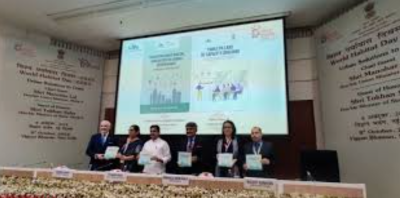
The National Institute of Urban Affairs (NIUA), an autonomous think tank operating under the Ministry of Housing and Urban Affairs, celebrated its golden jubilee to mark 50 years of contributing to integrated and sustainable urban development since 1976. The milestone convention, organized around the theme “Resilient Urban India @2047,” brought together national and international stakeholders to address climate-adaptive workflows, sustainable mobility, and innovative urban governance. The milestone event featured the rollout of specialized technical publications on urban climate strategies alongside the launch of digital learning tools to improve institutional capacities across municipal boundaries.

Institutional Framework and Evolution

Origin and Mandate

The National Institute of Urban Affairs was established in 1976 to bridge the operational gap between academic urban research and field-level administrative practice. It functions as a premier research organization, advising central, state, and municipal authorities on urbanization policies, land economics, and municipal governance. The organization aligns its research portfolios with the United Nations Sustainable Development Goals (SDGs), specifically focusing on making human settlements inclusive, safe, and resilient.

Core Functional Verticals

The institute operates through dedicated thematic sub-units to balance municipal challenges holistically:

  • Urban Resilience Unit (URU): Formed to integrate structural resilience frameworks into local master plans, helping cities adapt to sudden environmental or infrastructure shocks.
  • Climate Centre for Cities (C-Cube): Focuses on mainstreaming climate-responsive indicators across domestic urban planning mechanisms.
  • Water and Environment Vertical: Works directly with the National Mission for Clean Ganga (NMCG) to build river-centric urban planning guidelines.

Key Initiatives and Launch Frameworks

National Urban Learning Platform (NULP)

Launched during the golden jubilee celebrations as an integrated component of the iGOT-Mission Karmayogi framework, NULP standardizes digital capacity building across the country. The platform digitizes knowledge tools to help municipal staff, urban practitioners, and local administrators acquire skills in spatial planning, waste management, and data-driven governance.

Technological Transformation Models

The current urban agenda emphasizes moving beyond baseline recovery models toward anti-fragile municipal setups using emerging technologies.

Focus DomainTechnological ToolOperational Application
Urban AnalyticsUrban Data ObservatoriesServing as a centralized repository for spatial and non-spatial datasets to support evidence-based municipal decisions.
Disaster PreparednessDigital Twin TechnologiesCreating simulated 3D city replicas to run real-time climate vulnerability and flood-risk models.
Municipal FinanceAsset Monetization HubsOptimizing local government revenue streams, property tax collection, and municipal bond issuances.

Challenges in Contemporary Indian Urbanization

Structural Stresses and Infrastructure Shocks

Indian cities face overlapping vulnerabilities, including chronic administrative resource strains and sudden climate events. High-intensity earthquakes threaten large percentages of the domestic landmass, while unplanned expansion increases urban flooding risks, creating economic vulnerabilities for urban local bodies (ULBs).

Governance and Financial Strains

Many municipal corporations lack sufficient independent revenue generation models, making them dependent on central and state fund transfers. This financial dependence limits local flexibility when developing custom climate-adaptive infrastructure or deploying smart sanitation networks.

IASPOINT Booster Facts for UPSC

  • Nodal Ministry Interlocking: The institute functions as an autonomous society registered under the Societies Registration Act, 1860, supported fundamentally by the Ministry of Housing and Urban Affairs.
  • River Cities Alliance (RCA): The institute provides the official secretariat for the RCA, a dedicated platform launched to help river-adjacent towns implement sustainable urban river management plans.
  • CITIIS Programme Management: The institute serves as the primary Program Management Unit for the City Investments to Innovate, Integrate and Sustain (CITIIS) initiative, co-funded by the French Development Agency (AFD) and Kreditanstalt für Wiederaufbau (KfW).
  • Urban India Journal: The institute has published “Urban India,” a peer-reviewed, bi-annual journal focusing on spatial demographics and metropolitan governance, since 1981.
  • The 100-Day Planning Concept: The institute’s resilience training modules mandate that municipal bodies establish emergency operational procedures capable of resetting key drinking water and telecom connectivity links within brief post-disaster windows.
Last Modified: June 15, 2026

Leave a Reply

Your email address will not be published. Required fields are marked *

Archives