
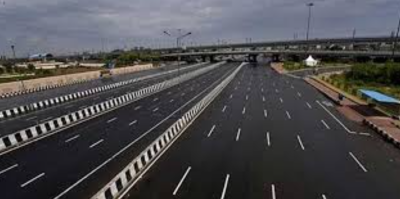
India has advanced its transportation landscape by expanding and modernizing its National Highway infrastructure, with the network increasing from 91,287 km in 2014 to 1,46,572 km by 2025–26. Under leadership focused on infrastructure development, the flagship Bharatmala Pariyojana program acts as a central mechanism to establish 34,800 km of standard highway corridors. This continuous development reduces transit logistics costs, creates comprehensive connectivity across remote and strategic areas, and advances the national economic trajectory toward the destination of a self-reliant Viksit Bharat by 2047.
Strategic Architecture of Bharatmala Pariyojana
Key Operational Components
The program shifts national highway development from a fragmented, project-based approach to an integrated, corridor-based development strategy. It focuses on optimizing trunk infrastructure to establish standard transport links across economic zones, industrial nodes, and maritime ports.
| Component Type | Planned Target Length | Primary Functional Objective |
| Economic Corridors | 9,000 km | Link major industrial clusters and high-volume commercial centers. |
| Inter-Corridor & Feeder Routes | 6,000 km | Ensure optimal connectivity between primary corridors and secondary cities. |
| National Corridor Efficiency | 5,000 km | Remove operational trade bottlenecks via bypasses, lane expansions, and ring roads. |
| Border & International Roads | 2,000 km | Strengthen strategic border infrastructure and facilitate cross-border trade. |
| Coastal & Port Connectivity | 2,000 km | Enhance port-led development and support the domestic blue economy. |
| Expressways | 800 km | Establish high-speed, access-controlled greenfield travel corridors. |
The Hub-and-Spoke Logistics Model
The program introduces a structural transformation by grouping freight movement through a hub-and-spoke model. This framework organizes transit through strategically located Multi-Modal Logistics Parks (MMLPs). High-capacity trucks manage hub-to-hub cargo transfer, while smaller commercial vehicles handle regional distribution spokes. This operational design improves fleet utilization, lowers fuel consumption, and addresses supply chain vulnerabilities.
Landmark High-Speed Transit Corridors
Delhi–Mumbai Expressway
Spanning a planned length of 1,386 km, this access-controlled greenfield project connects Delhi, Haryana, Rajasthan, Madhya Pradesh, Gujarat, and Maharashtra. The alignment serves as an economic lifeline, cutting transit times between the national capital and India’s financial hub by half while incorporating dedicated utility corridors for digital fiber networks and clean energy infrastructure.
Specialized Regional Expressways
- Dwarka Expressway: This urban high-speed corridor utilizes an advanced multi-tier elevated design, including an underground tunnel network, to separate local traffic from long-distance transit and ease heavy gridlock near New Delhi.
- Delhi–Meerut Expressway: Merging high-speed lanes with dedicated local access routes, this project has lowered commute times to under an hour, supporting balanced economic growth across western Uttar Pradesh.
- Bengaluru–Mysuru Expressway: This project serves as a key economic connector in southern India, lowering standard travel times to roughly 75 minutes, improving regional road safety, and supporting tech corridor expansions.
Delhi–Dehradun Economic Corridor
This 213-km, six-lane access-controlled highway cuts travel times to approximately 2.5 hours. The project balances modern logistics needs with environmental preservation by featuring a 12-km elevated wildlife corridor across the Rajaji National Park landscape to allow safe animal migration underneath the transit structure.
IASPOINT Booster Facts for UPSC
- Program Progress Status: As of March 31, 2026, contracts covering 26,425 km have been awarded, and 22,590 km of highways have been constructed under the Bharatmala Pariyojana framework.
- National Logistics Impact: A comprehensive study conducted by the Indian Institute of Management Bangalore (IIMB) confirmed that the expansion of access-controlled corridors has systematically reduced national logistics and cargo transit costs.
- District Connectivity Metric: The primary objective of the program is to increase the number of district headquarters connected by minimum four-lane highways from 300 to 550.
- Freight Volume Shift: The initiative targets moving 80% of nationwide road freight traffic onto the National Highway network, a major jump from the historical baseline of 40%.
- Greenfield Capital Inflows: India’s National Highways Infra Trust (NHIT) raised ₹16,000 crore via its Infrastructure Investment Trust (InvIT) monetization round, marking an evolution in asset-recycling methods for road infrastructure.
- Global Network Comparison: With a total road network spanning over 6.62 million km, India possesses the second-largest road transport network globally, behind the United States.
