
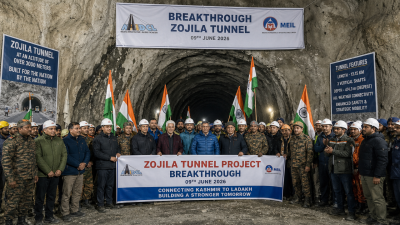
The Zojila Tunnel achieved a major physical breakthrough at Minamarg, Kargil district, on 9 June 2026. This 13.15 km project on the Srinagar–Leh corridor will provide all-weather connectivity between Baltal (J&K) and Minamarg (Ladakh), bypassing snow-prone mountain passes.
Engineering and Operational Features
- Methodology: Constructed using the New Austrian Tunnelling Method (NATM), involving selective blasting and staged excavation.
- Extreme Specifications: Built at an elevation of 11,578 feet, designed to withstand temperatures down to -30°C and avalanche risks.
- Safety Infrastructure: Features three vertical ventilation and rescue shafts, with the deepest extending 474.3 metres.
- Strategic Impact: Reduces travel time between Sonamarg and Minamarg from ~2 hours to 15–20 minutes, ensuring year-round mobility for the Indian Armed Forces and local logistics.
- Timeline: Project construction commenced in October 2020; full operational status is targeted for 2028 with an estimated cost of ₹6,500–6,800 crore.
IASPOINT Booster Facts
- Strategic Connectivity: The tunnel is critical for the Srinagar–Leh highway, ensuring the Ladakh region remains accessible during harsh winter months.
- Construction Challenges: Excavation required advanced techniques to manage unstable rock strata and significant water ingress from snowmelt.
- Economic Boost: The project is expected to enhance tourism, regional trade, and socio-economic integration between Jammu & Kashmir and Ladakh.
- Project Scale: It ranks as one of India’s largest and most complex road tunnel projects executed in a high-altitude, fragile Himalayan environment.