
Daily Activities

UPSC Prelims Current Affairs

UPSC Mains Current Affairs

Current Affairs

Quad Indo-Pacific Strategic Alliance

Quad Indo-Pacific Strategic Alliance

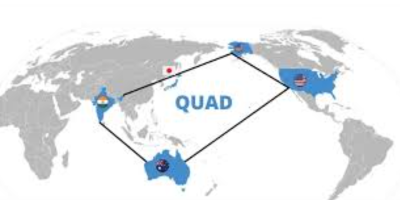
The Quadrilateral Security Dialogue (Quad), consisting of the United States, India, Japan, and Australia, was revived in 2017 to counter expanding Chinese influence across the Indo-Pacific region. Under the second administration of US President Donald Trump, the alliance has experienced clear policy adjustments, highlighted by the cancellation of the 2025 leaders’ summit in India due to shifting US-India trade dynamics and the imposition of targeted US tariffs on member states. Despite these administrative frictions, the grouping continues functional operations through the Indo-Pacific Maritime Surveillance Collaboration (IPMSC) initiative and structured security exercises, aiming to maintain strategic equilibrium among the four democracies.

Evolution and Structural Architecture

Genesis and Revival Cycles

The Quad originated as an ad-hoc coordination group during the 2004 Indian Ocean Tsunami to handle Humanitarian Assistance and Disaster Relief (HADR) operations. It formally transitioned into a diplomatic dialogue in 2007 under Japanese Prime Minister Shinzo Abe but dissolved shortly after due to regional alignment shifts. The formal resuscitation occurred on the sidelines of the ASEAN Summit in 2017, driven by a shared vision for a Free and Open Indo-Pacific (FOIP) and pushback against state-backed economic coercion.

Core Pillars of Cooperation

The alliance functions along multiple security and development vectors, bypassing the rigid structures of a formal military pact:

  • Maritime Security: Ensuring adherence to the United Nations Convention on the Law of the Sea (UNCLOS) and maintaining unhindered sea lines of communication.
  • Critical Technologies: Standardizing telecommunications infrastructure, coordinating 6G research, and securing semiconductor supply pathways.
  • Climate and Health Infrastructure: Allocating resources toward disaster-resilient infrastructure and managing vaccine distribution programs across island nations.

Contemporary Strategic Initiatives

Maritime Domain Awareness and Surveillance

The newly launched Indo-Pacific Maritime Surveillance Collaboration (IPMSC) works alongside the existing Indo-Pacific Partnership for Maritime Domain Awareness (IPMDA). These frameworks enable member countries to exchange real-time satellite data with regional tracking centers like India’s Information Fusion Centre-Indian Ocean Region (IFC-IOR).

Critical Minerals and Supply Chain Resilience

The establishment of the Quad Critical Minerals Initiative Framework coordinates investment across the four nations to secure alternative processing chains for rare earth elements.

SectorSpecific Project / Partnership FrameworkPrimary Focus Area
ConnectivityPorts of the Future PartnershipDevelopment of critical port infrastructure in Fiji and key island corridors.
TechnologyNext-Gen Communication StandardsJoint 6G development and Open RAN technical standards harmonization.
InteroperabilityQuad-at-Sea Ship Observer MissionJoint coast guard exercises and maritime tracking capacity building.
DigitalUndersea Cable ConnectivityEnsuring secure digital data networks for all Pacific Island Forum countries.

Geopolitical Friction Points

Strategic Disagreements and Shift in Priorities

The recent institutional friction stems from a readjustment in American foreign policy priorities under the current administration, which emphasizes transactional bilateralism and direct economic returns over traditional multilateral agreements. Tariffs imposed on allied exports and distinct approaches toward external geopolitical conflicts have created divergent strategies within the group.

The Non-Military Alignment Model

Unlike a collective defense treaty like NATO, the Quad possesses no mutual defense clause. India maintains a strict stance of strategic autonomy, preferring the alliance to remain a diplomatic and functional mechanism rather than an explicit military bloc, ensuring it can handle independent border security dynamics.

IASPOINT Booster Facts for UPSC

  • The Tsunami Core Group: The precursor to the Quad was the International Tsunami Core Group established in December 2004, comprising the identical four member states.
  • Malabar Exercise: While separate from the official Quad structure, the Malabar naval exercise serves as the primary military intersection point for all four nations.
  • Maritime Data Hubs: IPMDA data links directly into three regional centers: the IFC-IOR in India, the RMIFC in Madagascar, and the IFC in Singapore.
  • The 100-Day Window Concept: Unlike security pacts, Quad infrastructure delivery guidelines mandate emergency response planning to deploy relief supplies within short operational windows.
  • Spirit of the Quad: The first-ever joint leader statement, titled “The Spirit of the Quad,” was issued during the virtual summit hosted in March 2021.
Last Modified: June 15, 2026

Leave a Reply

Your email address will not be published. Required fields are marked *

Archives