
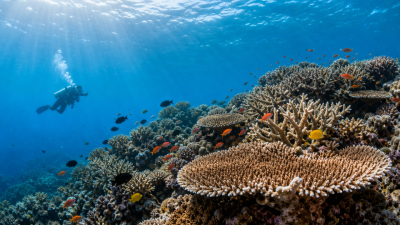
A global study unveiled on 16 June 2026 at the Our Ocean Conference in Mombasa identifies about 166,000 sq km (64,000 sq mi) of coral reefs with potential to survive and recover from climate change.
Key Findings
- Total resilient area: ~166,000 sq km, roughly one‑third of the world’s coral reef systems.
- Geographical spread: Present across 71 countries and 100 territories.
- Concentration: >60% of resilient reefs are in Australia, the Bahamas, Cuba, Indonesia and the Philippines.
Methodology & Projections
- Data base: Mapping tool built from >45,000 field observations dated 1960–2025.
- Projection scenario: Reef damage modelled to 2050 under a 2.1°C global temperature increase.
- Resilience criteria: Reefs persist as “cool spots”, show evolved heat tolerance, or exhibit faster post‑disturbance recovery.
Conservation Status
- Protected coverage: Only 28% of identified climate‑resilient reefs lie within protected or conserved areas.
- Vulnerable area: ~119,000 sq km remain outside protection and therefore exposed to local and climatic threats.
- Policy link: Findings inform area‑based targets such as the 30 by 30 goal to protect 30% of land and marine areas by 2030.
IASPOINT Booster Facts
- Research partners: Wildlife Conservation Society and Macquarie University; Bloomberg Ocean Initiative provided support.
- 30 by 30 context: Target originates from the Kunming‑Montreal Global Biodiversity Framework under the Convention on Biological Diversity.