
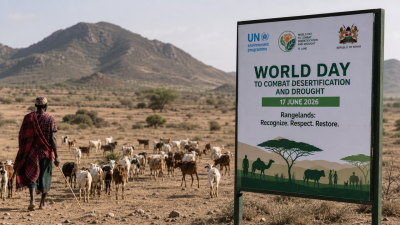
The World Day to Combat Desertification and Drought was observed on 17 June 2026 under the theme “Rangelands: Recognize. Respect. Restore.” Kenya hosted the global observance.
Rangelands: definition and types
- Definition: Lands dominated by natural grasses, shrubs or open woodland primarily managed for grazing and forage.
- Types: Grasslands, savannahs, shrublands, dry woodlands, deserts and alpine rangelands.
- Global extent: Cover more than 50% of Earth’s terrestrial surface.
Ecological and socio-economic functions
- Livelihoods: Support approximately two billion people through pastoralism, livestock and mixed farming.
- Ecosystem services: Regulate water cycles, sequester soil carbon, sustain grassland biodiversity and provide forage.
Degradation: scale and impacts
- Extent: Up to 50% of rangelands are degraded or at risk of degradation.
- Impacts: Reduced forage productivity, biodiversity loss, increased greenhouse gas emissions and threats to pastoral livelihoods.
- Kenya: Rangelands constitute about 80% of national land area and are central to millions of pastoralists.
International frameworks and observances
- World Day: Observed 17 June annually under UN auspices to focus on desertification and drought.
- UNCCD: United Nations Convention to Combat Desertification; COP is its decision-making forum (COP17 to be held in Mongolia, 2026).
- IYRP 2026: International Year of Rangelands and Pastoralists to raise policy and restoration attention.
- IUCN: Provides scientific guidance and advocacy on rangeland conservation and restoration.
IASPOINT Booster Facts
- UNCCD timeline: Adopted 1994; entered into force in 1996.
- Global targets: Land restoration featured in SDG 15.3 (land degradation neutrality) and the Kunming‑Montreal Global Biodiversity Framework.