
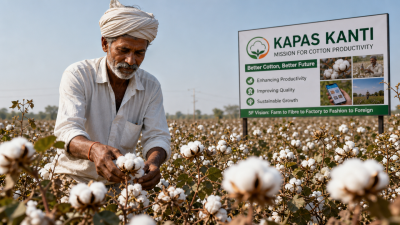
The Union Cabinet approved the Mission for Cotton Productivity (Kapas Kanti) on 5 July 2026 with an outlay of over Rs 5,600 crore to address productivity and quality gaps in India’s cotton sector.
Key Objectives
- Productivity: Raise per‑acre cotton yield through applied research, seed improvement and modern agronomy.
- Quality assurance: Establish certification and digital tools for supply of superior, traceable cotton.
- Fibre innovation: Promote new‑age natural fibres for sustainable textile inputs.
Major Components
- KASTURI Cotton Bharat: National brand for high‑quality sustainable cotton with end‑to‑end traceability.
- K‑Track platform: QR code + blockchain based provenance system for KASTURI Cotton.
- Kisan Kapas App: Farmer‑facing digital application for quality control and market information.
- Seed and crop tech: Deployment of high‑yielding, pest/disease‑resistant varieties and modern production technologies.
Targets, Beneficiaries & Finance
- Production target: 498 lakh bales by 2030–31.
- Beneficiaries: Approximately 32 lakh cotton farmers targeted.
- Budgetary outlay: Over Rs 5,600 crore approved by the Union Cabinet.
- Bale unit: Indian cotton bale conventionally taken as 170 kg.
Implementation & Institutions
- Implementing bodies: Ministry of Agriculture & Farmers’ Welfare and Ministry of Textiles.
- Standards & testing: Quality norms and testing align with Bureau of Indian Standards and Textile Committee frameworks.
IASPOINT Booster Facts
- Traceability tech: Blockchain is used to secure immutable provenance records and enable K‑Track QR verification.
- Monitoring metric: Yield per hectare and number of certified bales are primary measurable indicators for the scheme.