
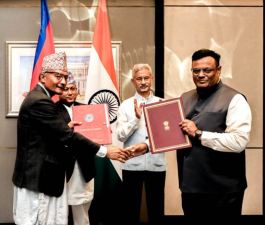
On 16 June 2026, the Digital India BHASHINI Division (DIBD) under MeitY signed an MoU with Kathmandu University’s Centre for Digital Public Infrastructure and Artificial Intelligence (DPI-AI). This partnership aims to co-create a ‘Voice First’ multilingual translation platform to bridge linguistic barriers and promote regional digital integration.
Objectives and Key Areas of Collaboration
- Voice-First Interface: Developing frameworks that allow citizens to access digital services through native speech, bypassing literacy barriers.
- Technical Cooperation: Jointly developing linguistic datasets, speech-to-text (STT), text-to-speech (TTS) engines, and conversational AI for the Nepali language.
- Language Preservation: Digitizing literary and oral traditions of under-represented and low-resource languages to prevent digital extinction.
- Capacity Building: Conducting joint research, workshops, and pilot programs involving language experts and technologists from both nations.
Understanding Project BHASHINI
Project BHASHINI (National Language Translation Mission) is a Digital Public Infrastructure (DPI) model under the Digital India Corporation, MeitY. It provides open, interoperable AI/NLP resources to startups, MSMEs, and the public.
- Scale: Currently powers over 800 government websites and processes 15 million+ inferences daily.
- Coverage: Supports 36 Indian text languages, 23 Indian voice languages, and 35 international languages.
IASPOINT Booster Facts
- Bhasa Daan: A crowdsourcing initiative under BHASHINI allowing citizens to contribute text/voice data to improve language models.
- Anuvadini AI: An AI tool under the AICTE ecosystem for translating technical (engineering/medical) textbooks into regional languages.
- DPI Diplomacy: This MoU follows India’s strategy of exporting successful digital stacks (like UPI) to neighboring nations.
- Constitutional Context: BHASHINI complements the constitutional mandate of the Eighth Schedule, which lists 22 officially recognized languages.